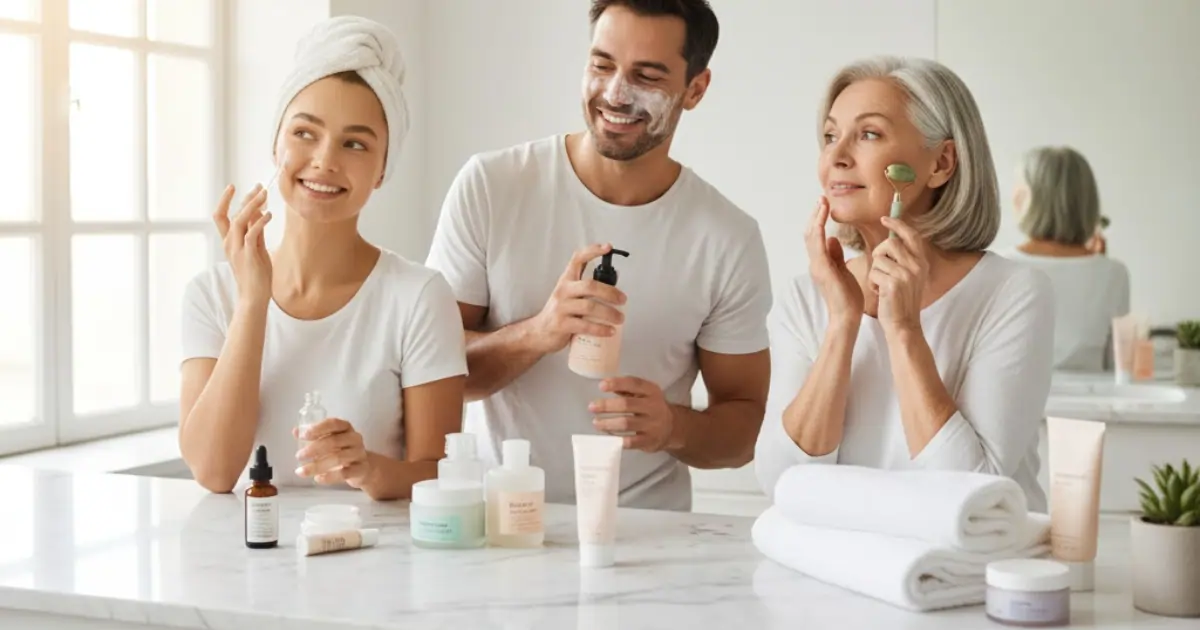
10 Daily Habits for Naturally Healthy Skin
The quest for healthy skin goes far beyond physical appearance. It is an indicator of well-being, self-care, and even quality of life. Radiant, firm skin reflects a balance between hydration, nutrition, sleep, and protection against external factors. According to the Sociedade Brasileira de Dermatologia (SBD), about 55% of people in Brazil say they have experienced some type of skin problem related to a lack of basic care, such as moisturizing or using sunscreen. This shows just how essential daily care is.
Why does healthy skin require so much care?
The skin is the largest organ in the human body, accounting for about 16% of total body weight. It performs vital functions: it protects against external aggressions, regulates body temperature, eliminates toxins, and acts as a barrier against microorganisms.
Without proper care, the skin loses its protective ability, resulting in visible signs such as dryness, blemishes, acne, premature aging, and, in severe cases, diseases such as skin cancer. Therefore, skin care is not a luxury, but a public health necessity.
The skin is the largest organ in the human body and performs functions that are vital to health, which is why it requires so much care. More than just a matter of aesthetics, it acts as a protective barrier against external agents such as bacteria, viruses, pollution, and solar radiation. Without a proper skincare routine, its ability to defend itself can be compromised, increasing the risk of infections and diseases.
Another reason is that healthy skin is constantly exposed to the environment. Unlike other internal organs, it is directly affected by solar radiation, temperature fluctuations, humidity, and even chemicals. This continuous exposure causes wear and tear that must be counteracted through moisturizing, sun protection, and regular cleansing.
In addition, healthy skin plays a role in the body’s thermal balance. Through perspiration and the dilation of blood vessels, it regulates internal temperature, keeping the body in optimal condition. When the skin is not healthy, this process can be impaired, resulting in discomfort and even more serious problems.
Another important point is the role of healthy skin in sensory perception. It is densely populated with nerve endings that detect stimuli such as heat, cold, pain, and touch. For this mechanism to function properly, the skin must be intact, free of lesions or excessive dryness that could impair its natural sensitivity.
Cell renewal is another factor that requires attention. Healthy skin is constantly renewing itself, but this process depends on adequate nutrients, hydration, and daily care. When neglected, it can lead to premature aging, loss of elasticity, wrinkles, and dark spots—signs that many people seek to avoid.
Another reason to be so careful is the influence of hormones on the balance of healthy skin. Hormonal changes can cause excessive oiliness, acne, or dryness, especially during phases such as adolescence, pregnancy, or menopause. A tailored skincare routine helps mitigate these effects and keep the skin healthy.
Aesthetics is also an important reason. The appearance of healthy skin directly impacts self-esteem and the way people relate to themselves and others. Keeping skin clean, moisturized, and protected conveys vitality and well-being, which motivates many people to devote time and attention to their skincare routine.
Another point is that healthy skin serves as a “mirror” of our internal health. Problems such as poor diet, lack of sleep, stress, and metabolic disorders often manifest first on the skin, in the form of blemishes, dryness, or inflammation. Taking care of your skin, therefore, also means paying attention to your body’s overall health.
Preventing serious illnesses is yet another reason to practice consistent self-care. Skin cancer, for example, is one of the most common cancers worldwide and is directly linked to unprotected sun exposure. Daily use of sunscreen and regular visits to a dermatologist are simple measures that can save lives.
Healthy skin requires so much care because it is a complex, multifunctional system. It’s not just about preventing wrinkles or maintaining a youthful appearance, but about preserving an essential organ that protects, regulates, senses, and reflects the body’s overall health. Taking care of it is, in practice, taking care of the body as a whole.
Habit 1: Drink plenty of water throughout the day
Hydration is the foundation of healthy skin. Studies by the National Academies of Sciences recommend about 2.7 liters of fluids per day for women and 3.7 liters for men, including water and other fluids.
Practical example
Maria, 34, reported in a case study published in the Journal of Clinical, Cosmetic and Investigational Dermatology that, after increasing her daily water intake from 1 liter to 2.5 liters, she noticed a reduction in dryness and an improvement in skin elasticity in just 4 weeks.
👉 Practical tip: Set specific times to drink water and use apps that remind you when it's time to hydrate.
Habit 2: Use sunscreen every day
Sun exposure accounts for up to 80% of visible skin aging, according to the World Health Organization (WHO).
Using sunscreen with an SPF of at least 30 drastically reduces the risk of skin cancer and prevents age spots and wrinkles.
Quote from an expert
“Sunscreen is the best anti-aging product there is. No expensive cream can replace the benefits of daily sun protection.”— Dr. Ana Lima, dermatologist at the SBD.
👉 Practical example: Even indoors, artificial light and glare from computer screens can damage your skin. Wear sunscreen even on cloudy days.
Habit 3: Eat a balanced diet
Healthy skin starts on your plate. Foods rich in antioxidants—such as vitamin C, vitamin E, selenium, and zinc—fight free radicals and slow down cellular aging.
Statistics
A study by the American Academy of Dermatology showed that diets rich in fruits and vegetables reduce the signs of premature aging by up to 33%.
👉 Practical example: Including foods like oranges, kiwis, carrots, nuts, and salmon in your daily diet helps keep your skin firm and radiant.
Habit 4: Cleanse Your Skin Properly
Proper cleansing prevents the buildup of dirt, oil, and pollutants that clog pores. However, over-cleansing can be harmful.
👉 Recommendation: Wash your face twice a day with cleansers specifically formulated for your skin type.
Case Study
A survey by Dermatology Times showed that people who washed their faces more than 3 times a day were at greater risk of irritation and dryness.
Habit 5: Always moisturize
Even oily skin needs moisture. This prevents excessive sebum production and keeps the skin barrier intact.
👉 Practical example: Use gel moisturizers for oily skin and thicker creams for dry skin.
Quote from an expert
“Hydration is essential for all skin types. A lack of hydration compromises the skin’s barrier function and increases skin sensitivity.”— Dr. Roberto Takaoka, dermatologist.
Habit 6: Get a Good Night's Sleep
Getting between 7 and 8 hours of sleep per night is essential. While you sleep, your body produces collagen, which is responsible for skin firmness.
Statistics
According to the Sleep Foundation, people who sleep less than 6 hours a night are 30% more likely to develop premature wrinkles.
👉 Practical example: Create a bedtime routine, such as turning off screens 1 hour before bed and using soft lighting.
Habit 7: Avoid Excessive Stress
Stress releases cortisol, a hormone that increases oil production and contributes to the development of acne and inflammation.
👉 Practical example: Practicing meditation for 10 minutes a day significantly reduces stress, according to Harvard Health Publishing.
Habit 8: Don't wear too much makeup
Excessive use of makeup can clog pores.
👉 Recommendation: Choose “oil-free” makeup and remove it all before bed using appropriate makeup removers.
Habit 9: Exercise regularly
Exercise improves blood circulation and oxygenation of the skin, promoting a natural glow.
👉 Study: Published in the Journal of Dermatological Science, the study showed that people who exercise 3 times a week have greater skin elasticity.
Habit 10: Be consistent in your care
The secret to healthy skin isn't intensity, but consistency.
👉 Practical example: Adopting a 10-minute daily skincare routine yields much more lasting results than expensive, occasional treatments.
Common Challenges in Maintaining Healthy Skin
Taking care of your skin is essential for maintaining good health, self-esteem, and even preventing disease, but it isn’t always an easy task. Many people face daily challenges that make it difficult to maintain a proper routine, ranging from internal factors, such as genetics, to external ones, such as pollution and the weather. These obstacles can cause frustration and even lead people to neglect important skincare practices.
One of the biggest challenges is dealing with excessive oiliness. This problem is quite common, especially among young people and in regions with a hot climate. Excessive sebum production can cause enlarged pores, excessive shine, and increase the likelihood of acne. Controlling oiliness requires discipline with specific products, but it can also raise questions about which cosmetics actually work without drying out the skin.
On the other hand, many people struggle with dry skin. Dryness can result from climatic factors, the use of unsuitable soaps, very hot showers, or even a lack of hydration. In addition to discomfort, such as itching and flaking, dry skin loses its natural protective barrier, making it more susceptible to irritation and infection.
Another recurring challenge is the difficulty in dealing with acne. Although it is most commonly associated with adolescence, acne is also common in adults and can have hormonal, emotional, or lifestyle-related causes. In addition to causing cosmetic discomfort, it can leave blemishes and scars, requiring long-term care and dermatological follow-up.
The aging of healthy skin is also an inevitable challenge. Over time, collagen production decreases, elasticity is reduced, and wrinkles, fine lines, and age spots begin to appear. Many people have a hard time accepting these natural changes and end up investing in various products or treatments, which do not always yield satisfactory results.
Skin discolorations, such as melasma and post-inflammatory hyperpigmentation, are also among the top concerns. They can be caused by unprotected sun exposure, hormonal changes, or even acne scarring. An even skin tone is highly valued, and restoring that balance is often a time-consuming process.
Another challenge is maintaining consistency in your skincare routine. Many people start a skincare routine with enthusiasm but end up giving it up due to a lack of time, discipline, or quick results. It’s important to understand that positive effects on the skin usually appear over the medium to long term, which requires patience.
Choosing the right products is also a common challenge. The cosmetics market offers a vast array of options, which can be confusing for those who don’t know their own skin type. In addition, there is a risk of allergic reactions or irritation when using unsuitable or low-quality products.
Sun protection is another recurring challenge. Although it’s one of the most important skincare practices, many people neglect to use sunscreen because they think it’s only necessary on sunny days or at the beach. The habit of applying sunscreen daily still faces resistance, but it is essential for preventing dark spots, premature aging, and even skin cancer.
The impact of emotions and lifestyle cannot be ignored. Stress, poor diet, lack of sleep, and a sedentary lifestyle directly affect skin health. Often, the difficulty in maintaining balanced habits ends up manifesting as skin problems, showing that skin care goes beyond cosmetic concerns, as it also involves:
- Lack of time — many people believe that skincare takes hours, but an efficient routine can be completed in just a few minutes.
- Inappropriate products — using the wrong cosmetics can make skin problems worse.
- Information overload — the internet is full of conflicting advice; it’s best to consult dermatologists and reliable sources.
Practical Applications: How to Create a Simple Skincare Routine
- Morning: cleansing, moisturizing, and sunscreen.
- Afternoon: Reapply sunscreen (every 2 or 3 hours).
- Nighttime: deep cleansing, moisturizing, and, if necessary, applying nighttime serums.
Healthy skin is a reflection of balance
Maintaining healthy skin doesn’t depend on miracle cures, but rather on consistently following simple habits. When we combine hydration, a balanced diet, sun protection, quality sleep, and stress management, we achieve results that go far beyond aesthetics: we gain health, self-confidence, and well-being.
See Also
Comments
Loading comments…