
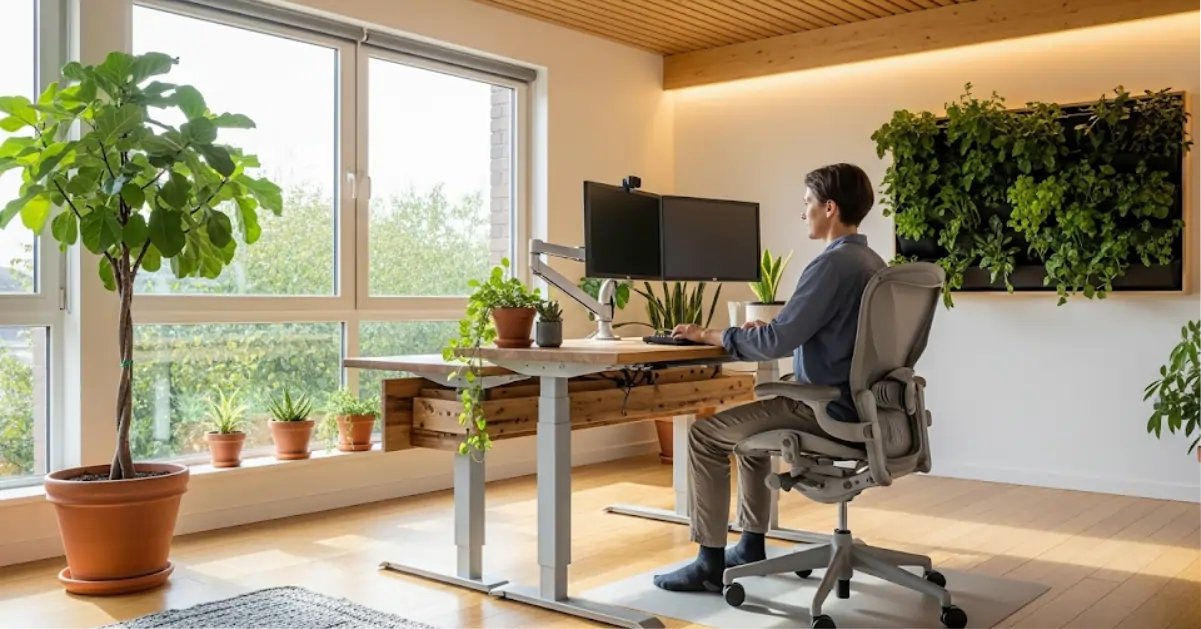
Sustainable Ergonomic Office
When balancing productivity and environmental impact, choosing the right office furniture is a critical decision. A workspace that doesn’t respect your health or the planet can lead to chronic pain, low productivity, and unnecessary environmental impacts. Fortunately, it’s possible to combine health and environmental awareness in a single space. A sustainable, ergonomic office combines proper posture, eco-friendly materials, and modern style—without compromising performance or the planet.
Why invest in a sustainable, ergonomic office?
A. Health Benefits
WHO studies indicate that ergonomic offices reduce back pain by up to 54%, improve posture, and decrease cases of RSI/WMSD.
B. Attracting Talent and Professional Recognition
Companies that adopt eco-friendly practices are 25% more attractive to millennial and Gen Z talent. Ergonomics adds value by helping to reduce stress and employee turnover.
C. Environmental Responsibility
Furniture made from certified (FSC) wood, carbon offsetting, and low formaldehyde emissions reduce the environmental impact of construction and logistics.
D. Long-Term Savings
Sustainable products last longer, require less maintenance, and consume fewer resources. A high-quality chair or table can prevent frequent replacements, reducing costs and waste.
Ergonomic Components: Take Care of Your Body
Ergonomics is the science of adapting the work environment to the needs of the human body, promoting comfort, safety, and efficiency. One of the key components of ergonomics is postural adjustment, which involves setting the chair to the correct height, positioning the screen properly, and providing support for the arms and feet. Maintaining proper posture prevents strain on the spine, shoulders, and neck, thereby preventing chronic pain and repetitive strain injuries.
Another essential aspect is ergonomic furniture, especially for those who work long hours sitting down. Chairs with adjustable lumbar support, desks at the right height, and wrist rests for the keyboard and mouse make a big difference in long-term health. Inappropriate furniture, on the other hand, can lead to progressive discomfort that compromises productivity and physical well-being.
Room lighting is also a key component of ergonomics. Lighting must be appropriate to reduce visual strain and prevent eye fatigue. Natural light is best, but when that is not possible, using lamps with the correct color temperature, diffused light, and no direct glare in the eyes or on the screen contributes to a healthier and more productive environment.
The layout of the workspace directly affects ergonomics. Frequently used items should be within easy reach to avoid unnecessary twisting and stretching. The monitor should be at eye level, and the keyboard and mouse should be close to the body. A cluttered desk or a space that’s too cramped forces the body to adapt to harmful positions.
Another important factor is taking active breaks and moving around periodically. No single position is 100% ergonomic if maintained for a long time. Getting up every hour, stretching, and moving around helps improve blood circulation, reduces the risk of muscle injuries, and improves concentration. Ergonomics isn’t just about static posture; it’s about striking a balance between work and movement to create a sustainable, ergonomic office environment.
Ergonomic education and awareness are essential. Understanding how the body reacts to different postures and physical exertion, and knowing how to prevent discomfort, is a key factor in promoting health. Companies and self-employed professionals who invest in ergonomics reap the benefits of better physical health, fewer absences due to pain, and a more productive and comfortable workday.
A. Ergonomic chair
- Adjustable lumbar support
- Seat with adjustable depth
- Adjustable arms (height and width)
- Base with casters suitable for the floor
- Reclining backrest with tension
B. Adjustable desk and monitor stand
- Table height: 70–75 cm
- Height-adjustable desk (preferably a sit-stand desk)
- Mount or articulating arm for screen alignment
C. Ergonomic Accessories
- Adjustable footrest
- Wrist rests and supports for the mouse and keyboard
- Anti-fatigue mat when working while standing
Sustainability Criteria for Furniture in a Sustainable, Ergonomic Office
A. Certified Materials
- Certified wood (FSC or PEFC)
- Recycled plastics or certified bioplastics
- Recovered or reused metals
B. Low VOC (formaldehyde) emissions
Look for certifications such as GreenGuard or Emission-free to reduce indoor pollutants.
C. Local or Regional Production
- Reduces transportation emissions
- Support for the local economy
D. Disassembly and Recycling
- Easily disassembled modules
- Reuse of Parts
Materials and Environmental Certifications
The life cycle of sustainable furniture begins with the selection of materials, which must be renewable, recyclable, or recycled, as well as sourced in an environmentally responsible manner. Certified wood, natural fibers, and recycled plastics are examples of raw materials that reduce environmental impact right from the source. This conscious choice prevents illegal deforestation, reduces pollutant emissions, and promotes a more ethical production chain.
During the manufacturing stage, processes must be efficient and have a low environmental impact. The rational use of water and energy, the control of industrial waste, and the replacement of toxic solvents and adhesives with alternatives that are less harmful to the environment are essential practices. In addition, manufacturers committed to sustainability adopt circular economy practices, in which leftover materials are reused in the production of new items for a sustainable, ergonomic office.
During use, the durability and versatility of sustainable furniture really stand out. Well-designed furniture, made with durable materials and featuring a timeless design, helps prevent excessive consumption and the generation of waste. Much of this furniture is modular or adaptable, allowing it to be adjusted to changes in the user’s life—such as new needs for space, function, or style.
Maintenance and repair are also part of the sustainable life cycle. Furniture that allows for the replacement of parts or that is easily accessible for repairs extends its useful life, reducing the need for early disposal. This also adds value to the work of small-scale professionals such as cabinetmakers and restorers, supporting the local and artisanal economy.
When furniture reaches the end of its useful life, responsible disposal is essential. Instead of sending it to landfills, it’s best to take it to recycling collection points, reuse programs, or recycling cooperatives. Some brands already offer programs to collect old furniture, reinforcing their commitment to post-consumer responsibility.
It is important to promote consumer education so that consumers understand their role in this cycle of renewal for a sustainable, ergonomic office. By choosing sustainable furniture, asking about the origin of products, and seeking information on recycling, consumers become active agents in environmental preservation. A conscious life cycle does not end with disposal—it renews itself through more responsible choices at every stage.
Case Study: Consultant Laura's Sustainable Ergonomic Office
Context
Laura, 38, a UX designer, wanted to transform her home office into an ergonomic, sustainable, and virtually carbon-neutral workspace—but on a modest budget.
Solutions Implemented
- Eco-Line Ergonomic Chair (wood from reforestation, recycled seat)
- Sustainable Hybrid Height-Adjustable Desk (low-emission MDF)
- Monitor stands made from recycled aluminum
- Recycled PET desktop
- Dimmable LED lighting and a natural plant that acts as an air filter
- Eco-friendly vinyl flooring or carpet made from recycled fibers
Results
- 70% reduction in neck pain
- Expected service life of 10 years (compared to 5 years for conventional furniture)
- A more comfortable work environment
- Customers who value environmental responsibility
Sustainable Office Maintenance
A. Cleaning Instructions
- Use microfiber cloths and eco-friendly products
- Avoid harsh solvents; use vinegar and water instead
B. Wear Inspection
- Lubricate and adjust the mechanisms
- Retighten the screws
C. Waste Reduction
- Reduce waste and dispose of electronics and batteries correctly
Advanced Tips for Maximizing Health and Sustainability
- Incorporate air-purifying plants
- Add a CO₂ sensor for air quality
- Biophilic design: wood, natural light, plants
Creating a sustainable, ergonomic office is an investment in your health, productivity, and the future of the planet. By choosing certified, adjustable, and environmentally responsible furniture, you create a space that aligns with your needs and contemporary values.
See Also
Comments
Loading comments…