Functional Multipurpose Room | Vida Ideal Blog and Shop
In increasingly compact homes, a functional multipurpose room has become essential. Where homes once had separate rooms for entertaining, working, and watching TV, today they need enough versatility for every square meter to serve multiple purposes without sacrificing comfort, aesthetics, or circulation. But how can so many needs be combined without creating visual clutter, a feeling of overcrowding, or functional stress? The answer lies in intelligent planning, adaptable furniture, visual zoning, and sound organization.
Why create a functional multipurpose room?
A. Saving space
B. Adaptable versatility
- Work in the morning, watch a movie in the afternoon, and exercise at night
- Welcome friends without having to rearrange the furniture
- Update the layout easily as needs change
C. Integrated style and comfort
- The color and material palette can remain cohesive and fluid
- Zoned lighting makes it easier to transition between uses
- Organization preserves a clean, airy feeling
How to plan the layout and zoning of a functional multipurpose room
Planning the layout and zoning of a functional multipurpose room requires a strategic approach because the space must support different activities in a practical, harmonious way. First, clearly identify the room's intended functions: will it be used for work, leisure, study, exercise, or all of these? This definition guides decisions about furniture, lighting, and space division, ensuring that each use has a dedicated place without compromising overall comfort.
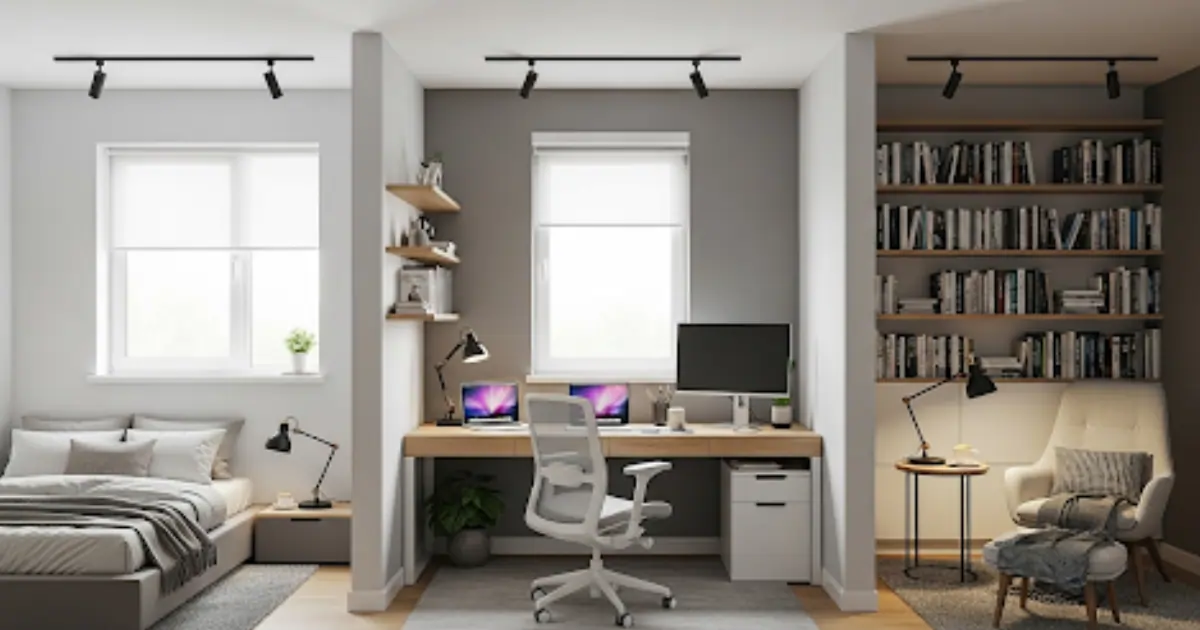
Once the uses are defined, zoning becomes essential. The idea is to divide the room into functional “zones,” even when the space is compact. A corner with a desk and shelves can form the home office, for example, while a sofa and television create the leisure area. Rugs, lighting, and furniture placement help visually define each zone without the need for physical partitions.
Circulation should also be planned carefully. Furniture must not obstruct passage between zones, and movement through the room should remain fluid. Flexibility is key in multipurpose spaces: modular, folding, or wheeled furniture makes it easy to change the layout quickly as needs arise. An ottoman, for example, can serve as a footrest while relaxing and as an extra seat during a gathering.
Furniture choices should prioritize compact, multifunctional pieces. Sofa beds, retractable tables, niches, and open shelving help optimize space. Using vertical space is also a smart strategy: high shelves and cabinets free up floor area and support organized zoning. This allows every function to have its own place without visually overwhelming the room.
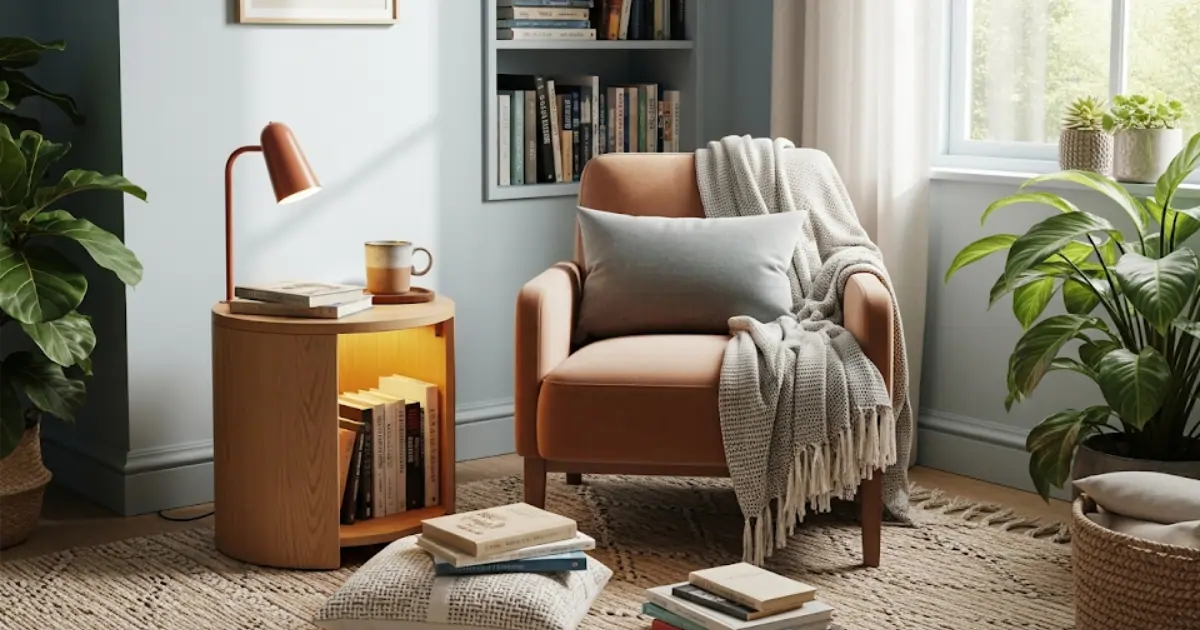
Lighting is fundamental to reinforcing each zone's purpose. Direct light is ideal for work or reading areas, while diffused lighting makes the relaxation area more inviting. Portable floor and table lamps are excellent options for completing the setting and allowing adjustments according to the activity.
Aesthetics should work together with functionality. A coherent visual style across zones creates a sense of unity despite their different uses. Neutral colors and an integrated palette favor visual harmony, while personal touches such as artwork or decorative objects strengthen the room's identity. Careful planning makes it possible to create a practical, beautiful multipurpose room that adapts to everyday life.
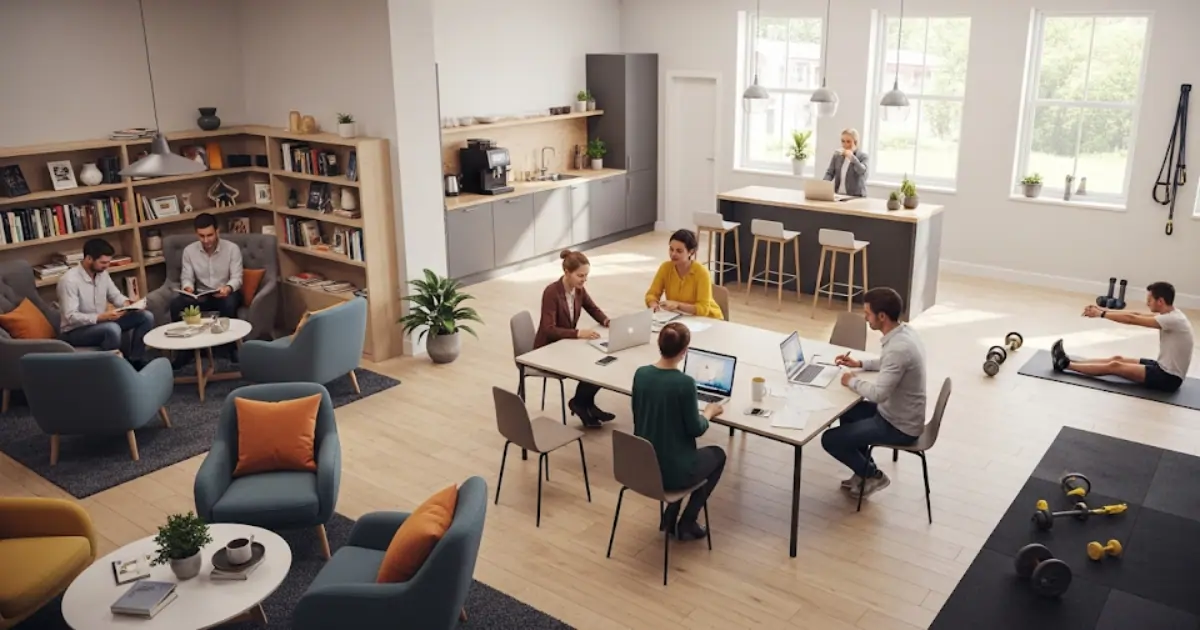
A. Main zones of the multipurpose room
- Living and reception area with a sofa and armchairs
- Home office with a desk, chair, and storage area
- Leisure and TV area with a media unit, TV, cup holders, and connectivity
- Fitness and relaxation area with a rug, bench, dumbbells, or futon
B. Organization in integrated sections
- A worktable that also serves as a dining console
- A sofa bed for sleeping or relaxing
- An open-backed bookcase that divides the living room and office
Modular furniture and creative solutions for a functional multipurpose room
A. Folding or retractable table
- Stored away when not in use
- Suitable for meals, work, and creative activities
B. Modular sofa or sofa with chaise
- Armchairs that become loungers or extensions of the sofa
- Baskets beneath the seats store accessories
C. Room-dividing bookcase
- Open-backed units serve as visual partitions without blocking light
- Space for books, a bar, plants, and storage
D. Wheeled furniture
- A table, organizer cart, and side table can move according to how the room is being used
Visual identity and decoration
The visual identity of a room is the set of aesthetic elements that conveys its personality, style, and purpose. In interior design, it goes beyond choosing attractive colors and furniture; it means creating a coherent atmosphere that reflects who uses the space and why it was designed. Just as a brand has an identity, a well-decorated room communicates sensations, values, and a way of life through its visual composition.
Choosing the color palette is one of the first steps in defining the identity of a functional multipurpose room. Light colors tend to convey brightness and spaciousness, while darker shades add sophistication and warmth. Vibrant colors can energize or highlight specific points. Harmony among the selected tones creates visual unity and connects furniture, finishes, fabrics, and decorative objects.
Textures and materials are equally important. Wood, glass, metal, natural or synthetic fabrics, stone, and plant fibers contribute as much to visual identity as color. Combining these materials can reinforce a style—rustic, industrial, or contemporary, for example—and create engaging contrasts. A room with well-balanced textures conveys visual and sensory richness and becomes more inviting.
Furniture plays a central role in building visual identity. Its design, size, finish, and arrangement all communicate the chosen style. Straight, simple lines suggest minimalism or modern design, while curved pieces and carved details evoke a more classic or retro style. Function also matters: furniture that balances form and utility reinforces the idea of a carefully planned space.
Decorative elements such as artwork, lamps, rugs, plants, and personal objects give a functional multipurpose room its soul. They personalize the space and make it unique by reflecting the preferences, memories, and experiences of those who live there. These items create focal points, introduce complementary colors, and enrich the room with visual layers that express an authentic identity.
A strong visual identity does not mean rigidity, but coherence. Different styles and periods can be combined as long as a common thread connects them, whether a predominant color, theme, shared material, or central idea. The overall result should be pleasing to the eye, functional in daily life, and true to the people who live there. Decorating is ultimately a way of telling a visual story with sensitivity and intention.
A. Harmonious palette
- Use 3 colors: a neutral base, an accent color, and a contrasting touch
- Repeat textures such as wood, glass, metal, or fabric
B. Appropriate lighting points
- Recessed spotlights in the main ceiling + a floor lamp
- Desk lamps in work areas and track lighting in reading areas
C. Visual unifying elements
- Area rugs whose shapes define different zones
- Curtains or blinds with a consistent appearance
Use and maintenance routine
A. Basic daily cleaning
- Organize cables and put away trays or books
- Keep floors clear so robotic vacuums can move around furniture and rugs
B. Weekly review
- Return misplaced items to their proper place
- Clean surfaces and glass
- Adjust the layout if necessary, including the table or rug
C. Quarterly review
- Assess whether new modules are needed
- Change throws, cushions, and seasonal elements
- Organize storage areas and accumulated items
Case study: Tânia, 34 years old, urban planner with a home office in a single room
Challenge: she works in a hybrid model, welcomes visitors, and wants to practice yoga occasionally, all in the living room.
Solutions adopted:
- Folding sofa bed with built-in storage
- Retractable wall-mounted desk with niches for files
- Open-backed bookcase used as a partition between office and living areas
- Reversible rug: plain on one side, fitness mat on the other
- Zoned lighting with dimmers and directional spotlights
- Wheeled cart that serves as a bar or mobile workstation
Result after 2 months:
- A room that changes function in less than 2 minutes
- A professional impression during video calls
- Visual balance and a clean feeling during transitions
Best practices and care
A functional multipurpose room is a contemporary response to limited space and the need for versatile environments. With intelligent planning, flexible furniture, and a coherent visual identity, anyone can create a space that adapts comfortably and elegantly to a range of everyday activities without sacrificing style.
See also
Comments
Loading comments…