
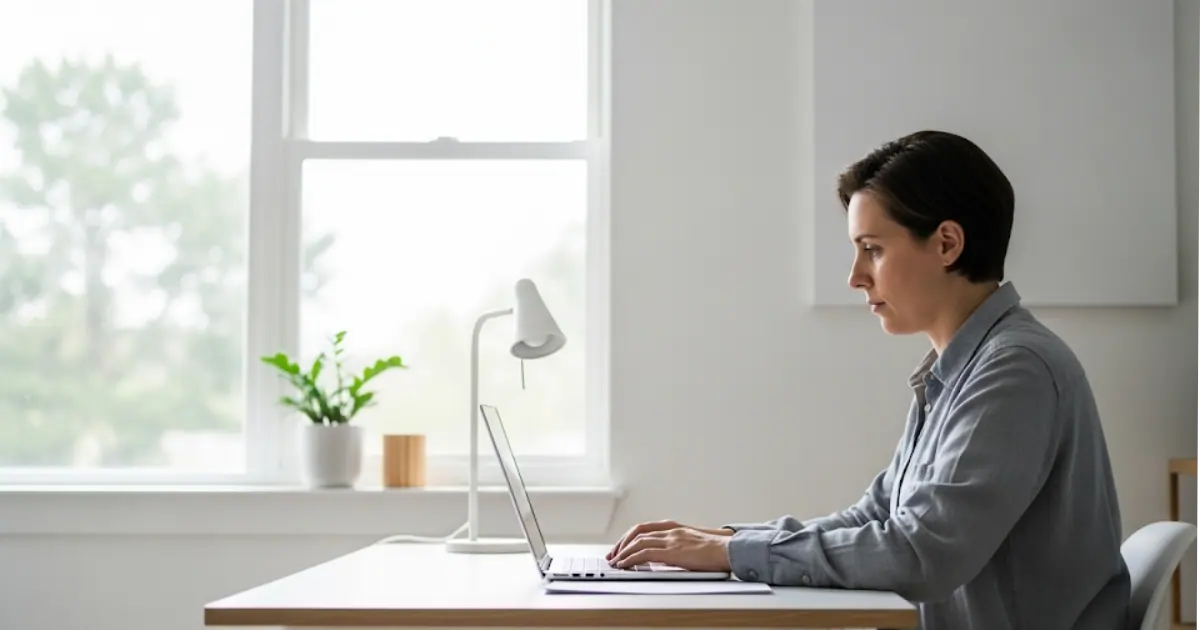
Minimalist Home Office
Amid constant distractions (cell phones, car horns, piles of paper), creating a minimalist home office allows every element of the space to serve a purpose, without excess or visual clutter. But what makes a space truly minimalist? The answer lies not in quantity, but in intention: clarity of purpose, personal identity, and functionality without anything superfluous.
Principles of a Minimalist Home Office
A. Purpose: Each item has a function
- Have only what you actually use at work
- Avoid duplicating tools and paperwork
- Ensure that each object has a clear label
B. Visible organization, not a mess
- Use of clean drawers, boxes, and niches
- No visible wires unless necessary
- Free space on the tabletop
C. Quality Over Quantity
- A selection of just a few items, but ones that offer good ergonomics and durability
- Opt for neutral materials (light wood, black metal, white)
D. Visual Clarity and Focus
- Limited color palette (up to 3 soft shades)
- Absence of distracting elements in the visual field
- Functional lighting, without excess
Layout and Essential Furniture for a Minimalist Home Office
A. Minimalist desk
- Clear desktop, with no large drawers
- Standard height (70–75 cm) and suitable depth
- Discreet brackets or a lightweight metal frame
B. Discreet ergonomic chair
- Compact model, with lumbar support and armrests only if needed
- Neutral-colored fabric (black, gray, or beige)
C. Minimalist bookcase or shelf
- Shelves for just a few books or organizational items
- No superfluous decorative objects
D. Minimum Accessories
- Slim Monitor Stand
- Compact lamp
- Essential Ergonomic Footrest
Functional organization without clutter
Maintaining a functional, minimalist home office without falling into the trap of hoarding requires awareness, routine, and practical day-to-day decisions. Hoarding objects often stems from the fear of needing them in the future, emotional attachment, or simply a lack of time to assess what is truly useful. Therefore, the first step is to change your mindset: instead of keeping things “just in case,” it’s more practical to keep only what serves a clear purpose and is used frequently.
A well-organized home or workspace doesn’t have to be cluttered to be complete. Functionality is directly linked to ease of access, movement, and cleaning. Fewer visible and stored items mean more open space and fewer visual distractions. This contributes to a lighter environment, with a sense of order and well-being. The secret lies in determining what really matters and letting go of the excess.
The “one in, one out” rule can be a great ally. When you buy something new, discard, donate, or recycle an equivalent item that’s already taking up space. This helps prevent your organization from falling apart over time. Creating categories and keeping everything in its proper place also enhances functionality: if every object has a designated “home,” the space naturally stays organized.
In addition, periodically reviewing your spaces is essential for keeping your minimalist home office organized. Set aside some time each month or quarter to go through your drawers, cabinets, and shelves. As part of this routine, you can identify items that are no longer useful or that you have duplicates of, and dispose of them thoughtfully. This practice prevents clutter from quietly building up again over time.
Investing in smart organizational solutions—such as labeled boxes, dividers, modular shelves, and vertical organizers—can optimize the available space in a minimalist home office without creating a sense of clutter. Functional organization is more about quality than quantity: a few well-chosen items, stored properly and used frequently, are more valuable than many objects accumulated out of insecurity or lack of attention.
It’s worth remembering that organizing a minimalist home office also has an emotional dimension. Hoarding can be a reflection of internal disorganization, fear of loss, or attachment to the past. Approaching the process of letting go with a lighthearted attitude—understanding that keeping only what is useful and meaningful can bring greater mental clarity and well-being—is a fundamental step toward a more functional, practical, and harmonious life.
A. Digital Filing System
- Avoid paper: scan everything
- Simple folder structure: Work / Projects / Important Documents
B. Quick Cleaning Routine
- At the end of each day: leave only what you used on the desk
- Non-essential items go in drawers
C. The 1:1 Rule
- When you buy a new item, get rid of an old one
- Prevents buildup and maintains balance
Visual ambiance of a minimalist home office
The minimalist visual aesthetic is a design approach that emphasizes the essentials, creating cleaner, lighter, and visually calming spaces. It seeks to reduce visual clutter and prioritizes functionality with simple, elegant aesthetics. This choice is not merely an aesthetic trend but also a way to create environments that convey peace, balance, and focus—elements that are increasingly valued in modern life.
In practical terms, the minimalist style relies on neutral colors, straight lines, and few decorative elements. White, gray, earth tones, and black are often used to create a visual foundation that conveys calm and spaciousness. These tones, combined with natural materials such as wood, stone, and lightweight fabrics, help create a welcoming and sophisticated atmosphere without overwhelming the eye.
Furniture in minimalist spaces typically features a functional design, with simple shapes and well-defined proportions. Every piece has a clear purpose; nothing is superfluous. This approach helps maintain the flow of the space, promoting ease of movement, natural light, and a sense of order. The result is a more airy and comfortable environment that invites relaxation and contemplation.
Lighting, in fact, is one of the key elements of this style. Minimalist spaces emphasize natural light, complemented by discreet and strategically placed light fixtures that create focal points without disrupting the visual harmony. By avoiding overly bright lights or excessive decorative effects, the space maintains its softness and reinforces the sense of balance.
Another important aspect of a minimalist home office is the choice of decorative objects. Instead of lots of knickknacks, minimalism suggests select pieces with real aesthetic or sentimental value: a well-placed painting, a statement plant, or a vase with a striking design. This ensures that each element takes center stage and serves a purpose, contributing to the space’s identity without creating visual clutter.
A minimalist visual environment isn’t about living with the bare minimum, but with the essentials. It invites us to reflect on what is truly necessary to feel good in a space. By eliminating excess and focusing on what is meaningful, minimalism creates calmer, more organized, and more intentional spaces—direct reflections of a more mindful and balanced life.
A. Neutral colors
- White, light gray, or beige base
- Pops of color on a cushion, notepad, or plant
B. Minimalist Lighting
- Neutral white light (~4000 K) to support concentration
- Recessed lamp with dimmed light for breaks
C. Light Visual Elements
- A small plant
- A minimalist painting or a short phrase
Case Study: Eduardo, 32, a developer working from home
Challenge
A desk covered with papers, cables, and accessories that distracted him during work hours.
Solutions Implemented
- He switched to a compact chair and a clear desk
- He scanned documents and got rid of stacks of paper
- He chose a monitor stand and a hanging drawer
- He added a plant and a slim lamp
Results after 4 weeks
- Reduction of visual distractions
- Sustained focus and a feeling of lightness
- Greater productivity and less mental exhaustion
Maintenance Routine for a Minimalist Home Office
A. Daily Review (2 min)
- Put away the gloves, the bottle, and other objects
- Turn off electronics that aren't in use
B. Weekly Review (10 min)
- Clean surfaces
- Assess the need for documents and equipment
C. Quarterly Review
- Removal of 2 to 5 unused items
- Discuss whether new items serve a necessary function
A minimalist home office isn’t just about aesthetics—it’s a work philosophy that promotes focus, productivity, and mental clarity. With essential furniture, simple organization, and intentional decor, you can create an environment that helps you achieve more with less, while enjoying a better quality of life.
See Also
Comments
Loading comments…