
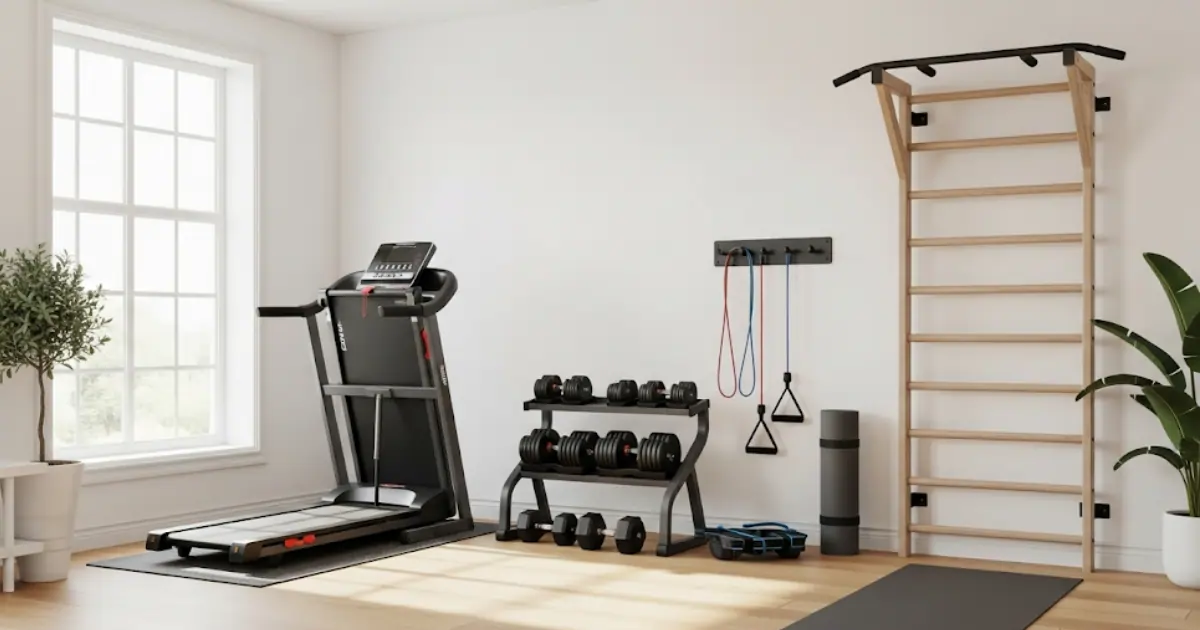
Compact Home Gym
With increasingly hectic schedules, going to the gym can seem impossible. At the same time, a sedentary lifestyle poses a real risk to both physical and mental health. How can you maintain discipline and quality of life, even without room for a full-fledged gym? The solution lies in a compact home gym: a simple, versatile, and efficient space for working out at home, even in very limited space. In this guide, you’ll learn:
- Why Set Up a Home Gym
- What equipment is essential and cost-effective?
- How to Plan for Space, Safety, and Inspiration
- Practical Training Tips
- Maintenance and Development Plan
Benefits of a Compact Home Gym
Having a compact home gym offers countless benefits for those seeking convenience and well-being in their daily lives. One of the main benefits is saving time. With equipment at home, there’s no need to travel to a gym, which eliminates time spent in traffic and allows you to work out at any time, fitting physical activity into your routine with much greater flexibility.
In addition, a compact home gym allows for complete customization of the space. You can choose the equipment you actually use and arrange the space according to your aesthetic and functional preferences. This creates a more comfortable and motivating environment, where your workout adapts to you—not the other way around.
Another important benefit is long-term financial savings. Although the initial investment in equipment may seem high, it pays for itself over time by eliminating monthly gym membership fees, transportation costs, and the expense of special workout clothes. With proper maintenance, the equipment lasts for years, making it a very cost-effective investment.
Privacy is another major advantage of a home gym. Many people feel uncomfortable working out in crowded or competitive environments. In your own space, you can exercise in peace, try out new movements, and progress at your own pace, without judgment or outside distractions.
Another important aspect is hygiene and environmental control. At home, you have control over the cleanliness of your equipment, ventilation, temperature, and even the music you listen to during your workout. This is especially important for people with allergies, health limitations, or those seeking healthier and more personalized environments.
A compact home gym helps foster a more active and consistent lifestyle. Since it’s always within reach, the workout space serves as a visual reminder and source of motivation to stick to your exercise routine. It reduces common barriers to regular exercise—such as laziness, weather, or tight schedules—helping you build healthier and more sustainable habits.
A. Convenience and Cost Savings
- Avoids travel and extra time
- Reduces membership fees and commuting costs
- It lets you work out anytime
B. Focus and Continuity
- A dedicated space fosters commitment
- It makes it easier to develop habits and discipline
C. Customization
- It adapts to your pace, level, and goals
- The environment can be tailored to your personal style (colors, decor)
Choosing the Ideal Location for a Compact Home Gym
A. Possible Spaces
Essential and Affordable Equipment
A. Free weights and resistance bands
- Adjustable or various dumbbells (2–10 kg)
- Compact kettlebell (4–12 kg)
- Mini band, resistance band
B. Exercise mat, padded mat, or tatami mat
- Ideal for floor exercises and floor protection
C. Multifunctional Mounts
- Folding bench or adjustable armchair
- Wall-mounted holder for resistance bands
D. Supplementary Equipment
- Jump rope (compact and effective)
- Extra towel and mat for sweat
Planning Safety and Ergonomics for a Compact Home Gym
A. Free space
- Set aside at least 1 × 1.5 m for movement
- Free of sharp furniture and loose objects
B. Flooring and Ventilation
- Firm, non-slip flooring
- Good air circulation: window, fan, or air conditioning
C. Protective Equipment
- Towel, water bottle, and watch within reach
- Mirror for monitoring posture
Organization and Style
A. Practical Organization
- Boxes or open shelves for grips and resistance bands
- Hooks for storing dumbbells on the wall
- Vertical holders for exercise mats
B. Motivational Decor
- Wall with motivational quotes
- Neutral, clean background: keep the focus on the body
- Colorful exercise mat or cushions, or a subtle fitness theme
Suggested Exercise Routine
A well-structured exercise routine is essential for achieving consistent results and staying motivated. For beginners, it’s best to start with workouts three times a week, lasting an average of 20 to 30 minutes. The focus should be on basic, functional movements that work the whole body, such as squats, push-ups, sit-ups, and planks. This approach helps build endurance, strength, and coordination, preparing the body for greater challenges.
On the days in between, a good idea is to include light walks, stretching, or mobility exercises. This aids in muscle recovery, improves circulation, and reduces the risk of injury. Over time, these active moments also help improve posture and relieve accumulated tension, especially for those who spend many hours sitting.
As your fitness level improves, you can divide your routine into workouts by muscle group: for example, Mondays for the lower body, Wednesdays for the upper body, and Fridays for the core (abdominals and lower back). This allows for greater intensity for each muscle group, with adequate rest between workouts. Varying the training stimuli also prevents monotony and promotes more efficient gains.
Using simple equipment in a compact home gym—such as dumbbells, resistance bands, jump ropes, or kettlebells—can enhance your routine without taking up much space. With these tools, you can intensify your strength training and vary your exercises. Even in a compact home gym, you can build a challenging routine with minimal equipment and plenty of creativity.
In addition to strength training, it’s important to set aside one or two days for aerobic exercise, such as climbing stairs, jumping rope, doing circuit training, or following online classes. These workouts increase calorie burn, improve cardiovascular health, and help manage stress. Variety also keeps motivation high, reducing the risk of giving up due to monotony.
Including stretches at the end of each session is essential. Stretching improves flexibility, prevents muscle soreness, and aids in recovery. A balanced routine that focuses on strength, endurance, mobility, and rest ensures lasting results and contributes to physical and mental well-being. The key is consistency and adapting the routine to your lifestyle.
A. Beginner (no heavy equipment)
- Squats, lunges, planks, jumping jacks (3×12)
- Using resistance bands to increase intensity
B. Intermediate (with weights)
- Week: Alternate between upper-body, lower-body, and core workouts
- Use dumbbells for bicep curls and overhead tricep extensions
- Kettlebell exercises (balance swing)
Case Study: Lara, 26, Working from Home and Seeking Better Health
Challenge: Without going to the gym, she was sedentary and had limited space in her bedroom. She asked for a compact solution.
Solutions:
- Foldable exercise mat in the corner next to the bed
- 1 dumbbell weighing 5 kg + mini bands
- Wall with hooks for resistance bands
- Mirror and Motivational Stickers
Results in 6 weeks:
- Reduction of Back Pain
- Slight weight loss, increased strength
- A routine of working out 3 times a week
Sustainability and Maintenance of a Compact Home Gym
- Use eco-friendly products, such as recycled exercise mats
- Organize on a weekly basis and clean the floor and equipment
- Reassess goals and equipment every 3 months
A compact home gym proves that you don't need much to take care of what matters most: your health. With limited space and simple equipment, you can create a functional, motivating, and effective environment for working out consistently, comfortably, and enjoyably.
See Also
Comments
Loading comments…