
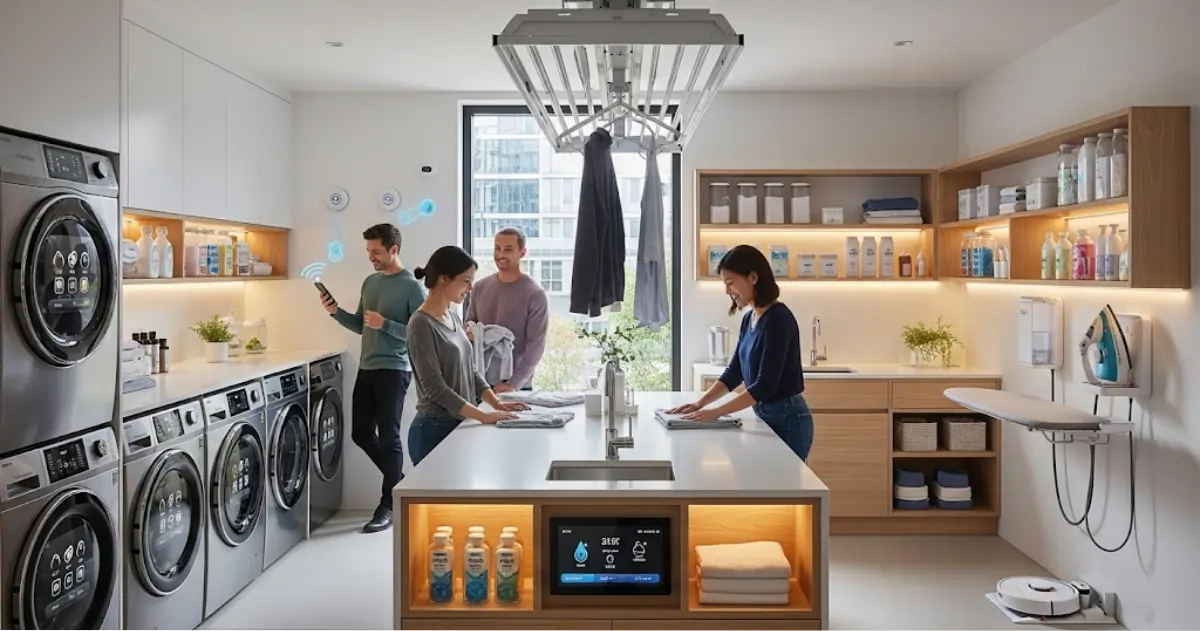
Organizing a Smart Laundry Room
Have you ever felt frustrated because you didn’t have enough space to sort, hang, fold, or store everything in an organized laundry room? Did you know that even a well-planned 1 square meter can become a functional, productive, and visually appealing space? A smart laundry room doesn’t have to mean a large or expensive one—it’s all about strategy, choosing the right materials, and establishing an efficient routine.
Why invest in a smart laundry room?
Investing in a smart laundry room is a strategic choice for anyone seeking convenience, cost savings, and sustainability in their daily life. These spaces are designed to optimize time and resources, combining technology and organization in a functional way. With modern, well-arranged appliances, the space becomes an efficient environment where household chores are completed more quickly and with less effort.
One of the main advantages of a smart laundry room lies in automation and connected appliances. Washing machines with remote programming, load sensors, and water-saving features allow for greater control over wash cycles. This makes it possible to tailor usage to the household’s actual needs, avoiding waste and freeing up time for other daily activities.
In addition to technology, smart design also makes all the difference. Well-utilized spaces with functional cabinets, retractable clotheslines, shelves, and dividers make it easier to store products and clothes. Everything has its place, which helps keep the space organized, clean, and pleasant at all times. Daily life becomes more seamless, without the stress of searching for items or dealing with clutter.
Another important point is sustainability. Smart laundry rooms are designed to reduce the consumption of water, energy, and chemicals. The mindful use of resources, combined with efficient machines and strategies such as reusing wash water, makes the space more eco-friendly and aligned with sustainable living practices.
From a financial standpoint, despite the initial investment, the benefits extend over the long term. The savings on cleaning products, energy, and clothing maintenance—since optimized cycles prevent excessive wear and tear on fabrics—represent a good return on investment. In addition, property appreciation is a factor to consider, since well-designed laundry rooms add value to the living space.
A smart laundry room also has a positive impact on quality of life. By automating processes and simplifying daily routines, it frees up more time for enjoyable activities or rest. A well-designed space reduces physical effort, minimizes mistakes such as improper washing, and provides a sense of control and comfort that extends throughout the home.
A. Efficiency in Daily Life
With a well-designed space, each step—from washing to folding—flows smoothly. This saves time and reduces visual stress.
B. Less accumulation and waste
Not leaving dirty clothes lying around prevents bad odors and damage to the fabric. No more lost socks or half-used rags.
C. Health and Safety
Damp or poorly ventilated areas can lead to mold and dust mites. An organized laundry room helps prevent this.
Physical Space Planning
A. Where to Set Up Your Laundry Room
B. Minimum Requirements
- Space for a washing machine or sink
- Space for a retractable or foldable clothesline
- Area for folding or sorting clothes
- Access to electricity and drainage
C. Modular Structure
Modules with adjustable shelves, simple drawers, or hanging baskets make organization easier.
Functional Organization Solutions
A. Sorting by type of clothing
- Labeled baskets: whites, colors, delicates, cleaning rags
- Internal dividers or movable organizer pouches
B. Smart Clothesline
- Retractable clotheslines for ceilings, walls, or balconies
- Stainless steel cables that can support weight and take up little space
C. Shelves and cabinets
- Shelves above the machine for products
- Niches with transparent boxes
- Side hooks for reusable bags, brushes, or brooms
D. Folding and Sorting Station
- Folding board, low table, or auxiliary countertop
- Foldable basket for clean clothes
An Efficient Weekly Routine
A. Suggested Schedule
B. Time-saving tips
- Avoid letting washable clothes pile up for more than 2 days
- Keep cleaning supplies within reach
- Have permanent labels for each basket
C. Visual Checklist
- Machine is clean, water pressure is OK
- Products in sufficient quantities
- Clothes sorted, with the area dry and clear
Sustainability and savings
Sustainability is one of the central pillars of a smart laundry room. By investing in well-planned technological solutions, it is possible to significantly reduce the consumption of natural resources, such as water and electricity. Modern machines are equipped with sensors that detect the weight of the laundry and automatically adjust the cycle, using only what is necessary for each load. This prevents waste and contributes to a more environmentally conscious approach.
In addition to conserving water, these laundry rooms use energy-saving equipment, such as inverter motors—which operate with less effort and noise—and quick wash cycles that reduce operating time. Dryers with moisture sensors automatically turn off when the clothes are dry, preventing unnecessary energy consumption. Together, these technologies help reduce the home’s ecological footprint in a practical and efficient way.
Another key point is the use of more sustainable cleaning products. Many smart laundry rooms feature automatic dispensers that measure out the ideal amount of detergent and fabric softener, reducing excess chemical waste in the environment. In addition, the use of biodegradable and homemade detergents, combined with optimized wash cycles, ensures effective cleaning without compromising the health of the planet.
In terms of savings, the benefits are also significant. Even with an initial investment in energy-efficient appliances and custom-built furniture, the return on investment becomes apparent in the medium and long term. Lower electricity and water bills, reduced maintenance needs, and the extended lifespan of clothing add up to significant savings over time.
A smart laundry room also promotes reuse and better use of resources. One example is reusing rinse water for yard cleaning or flushing toilets, using simple filtration systems. In addition, the organization and efficiency of the space allow for better planning of laundry cycles, avoiding unnecessary cycles and repeated washes caused by forgetfulness or a buildup of laundry.
By adopting sustainable practices in the laundry room, you contribute to a culture of environmental responsibility within the home. This encourages all residents to adopt more mindful habits and reinforces the importance of small, everyday actions. A smart laundry room therefore goes beyond convenience: it represents a commitment to a more balanced, economical, and environmentally responsible lifestyle, including:
- Concentrated and biodegradable products
- Reuse of wash water for general cleaning
- Natural cross-ventilation to reduce mold
- Baskets made of recyclable and durable materials
Case Study: Renata, 37, lives in a 40-square-meter apartment
Challenge: she put off laundry tasks until the weekend, allowing cleaning cloths and clothes to pile up, and lacked adequate ventilation and organization.
Solutions implemented:
- She transformed a small utility hallway with a washing machine and a ceiling-mounted clothesline
- She installed a shelf for products above the machine
- Labeled baskets in the lower cabinet
- Retractable folding section for separating clean items
- Exhaust fan and filter installed
Results in 1 month:
- More frequent and smoother laundry cycles
- No visual clutter or odors
- Well-cared-for clothes with less effort
Maintenance and improvement
- Regular cleaning of the filter, hoses, and fan
- Product review every 3 months
- Planning to replace worn-out items (clothesline, baskets, cabinets)
A smart laundry space transforms what many see as a tedious chore into a stress-free, efficient, and organized routine. Even in a small space, it’s possible to create simple, attractive, and effective systems that make the most of time, space, and well-being at home.
See also
Comments
Loading comments…