Efficient Home Office
If you work from home—whether every day or just a few days a week—you’ve probably already noticed that your environment has a direct impact on your productivity. But what if you don’t have an extra room available? Or what if you live with other people and share spaces? The good news: it’s possible to create an efficient home office in any room of the house, even in small or shared spaces. With some planning and a few adjustments, you can set up a functional, comfortable, and inspiring workspace. Here’s what you need to know:
- How to Choose the Best Spot for Your Home Office
- What factors are essential for productivity and health?
- Strategies for personalizing your space without losing focus
- Tools, furniture, and practices that transform your daily routine
Why invest in an efficient home office?
A. It directly impacts performance
Studies from Harvard University show that organized and well-designed environments increase productivity by up to 32%. Meanwhile, the Gallup Institute notes that employees with ergonomic and quiet workspaces report greater focus, less stress, and higher engagement with their work.
B. Promotes physical and mental health
A poorly lit, ergonomically unsound workspace that is exposed to constant noise can cause:
- Lower Back and Neck Pain
- Eye strain
- Irritability and anxiety
- Decrease in cognitive productivity
“Your environment is the stage for your performance. If it doesn’t support you, it sabotages you.”— James Clear, author of “Atomic Habits”
How to Choose the Best Spot in Your Home for an Efficient Home Office
Even if you don't have a dedicated room, you can still choose wisely where to set up an efficient home office space.
A. Assess the natural lighting
- Prioritize spots near windows
- Natural light improves mood, regulates the circadian rhythm, and reduces the use of artificial lighting
- Avoid direct light on the screen (excessive glare is distracting)
B. Observe traffic and noise levels
- Busy areas make it hard to concentrate
- Choose areas with a door or that can be separated by partitions, bookshelves, or curtains
C. Check for power outlets and internet access
- Avoid loose wires and wires that are far from outlets
- Keep the router nearby, or use signal repeaters
Essential Elements of an Efficient Home Office
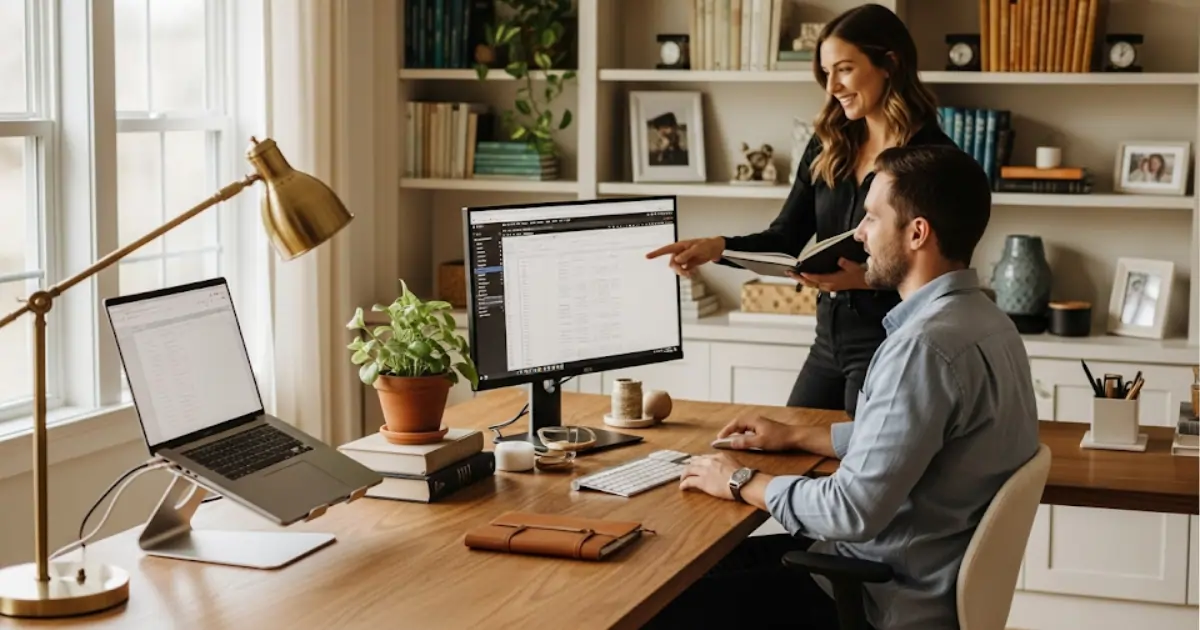
An efficient home office starts with creating a suitable physical environment. This includes an ergonomic chair, a comfortable desk, proper lighting, and good ventilation. Working in bed or in makeshift spaces may seem tempting, but it compromises both productivity and physical health. Setting aside a specific place for work helps the brain understand that this is a space for focus and productivity, which contributes to daily performance.
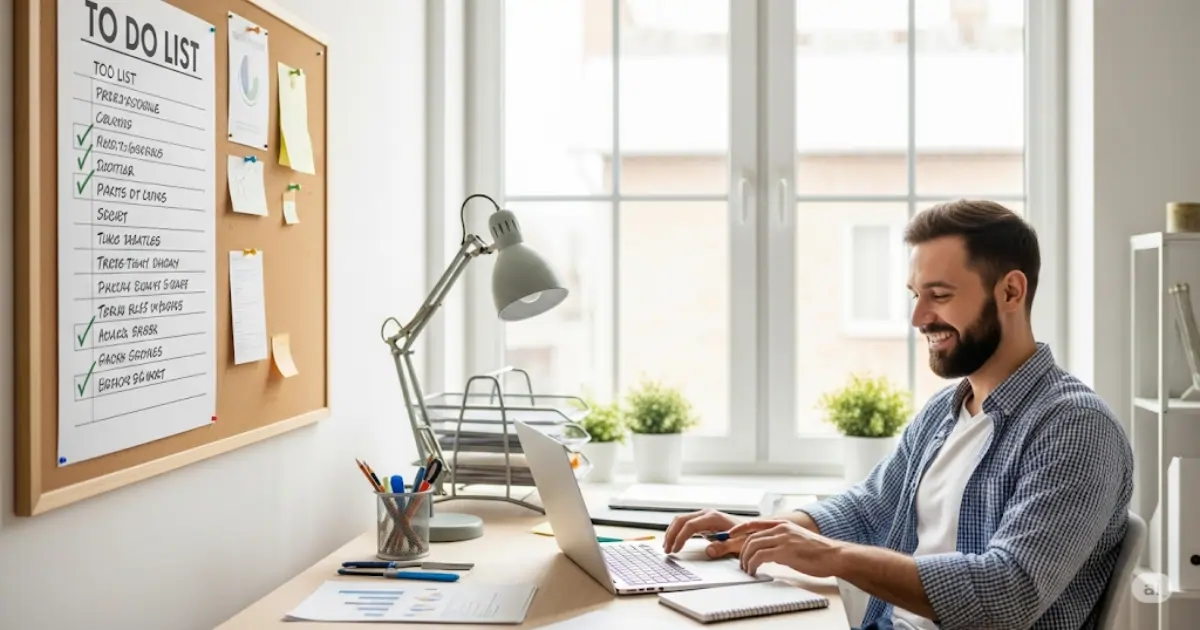
Another key element is time management. When working from home, there are many distractions, ranging from cell phone notifications to household chores. Having a clear routine, with set times to start, take breaks, and end the workday, makes all the difference. Planning tools, such as digital calendars or methods like the Pomodoro Technique, help maintain your pace and productivity throughout the day.
Technology also needs to support remote work. This includes a reliable internet connection, equipment in good working order (such as a computer and headset with a microphone), and the efficient use of communication and collaboration platforms. Investing in solutions that automate tasks, organize workloads, and facilitate communication with colleagues can save time and reduce stress.
Maintaining clear boundaries between personal and professional life is essential for mental health. Setting aside time for rest, sticking to work schedules, and communicating these boundaries with those you live with helps prevent burnout. An efficient home office is one that combines structure, organization, and well-being to create a sustainable and productive environment in the long term.
Strategies for Setting Up an Efficient Home Office in Small Spaces
A. Use “unused” corners and spaces
- A corner of the room? You can turn it into a workspace with a corner desk or a floating shelf.
- Space under the stairs? Ideal for a small desk with shelves above it
- Part of the closet? A removed door can become a built-in office space
B. Multifunctional Furniture
- Folding tables, retractable desks, or wall-mounted desks
- Chairs that double as storage chests for supplies
- Room divider bookcases that separate spaces while also providing organization
C. Visual dividers (without walls)
- Rugs, directional lighting, or openwork panels define the space
- Using different colors on the walls or furniture also visually “separates” the home office
How to Stay Organized in Your Day-to-Day Life
A. Establish a routine for the start and end of the workday
- Having set schedules helps the brain switch into “work mode”
- Changing clothes (even if you're staying home) marks the transition between your personal and professional lives
B. Create visual rituals
- When you're done with your work, put away your materials, close your planner, and turn off your equipment
- Use a storage bin to “clear off” the desk at the end of the day
C. Use vertical organizers and labels
- Shelves, niches, and magnetic panels make the most of walls
- Labeled folders prevent the accumulation of loose papers and documents
Customization Without Losing Focus
Personalizing your workspace is important for creating a welcoming and motivating environment, especially in an efficient home office. Adding elements that reflect your personality—such as pictures, plants, decorative items, or even a favorite playlist—can make the space more enjoyable and inspiring. However, it’s essential to strike a balance with this personalization so that it doesn’t become a source of distraction.
Staying focused requires paying attention to visual and auditory stimuli in your surroundings. A space that is overly decorated or cluttered with objects can cause distraction and make it difficult to concentrate. The tip is to opt for functional personalization: items that provide comfort and a sense of identity, but that don’t clutter the space or hinder productivity. Less is more when the goal is to keep your mind clear and focused.
Another important point is to adapt the space to your professional needs. For example, if your work involves creativity, you can include elements that spark ideas, such as visual murals. On the other hand, if your work requires more analysis and focus, it’s worth opting for neutral colors, soft lighting, and a cleaner layout. The key is to tailor the environment to the type of tasks you frequently perform.
In addition to the physical space, customization can also extend to the tools and work methods of an efficient home office. Using apps, calendars, or organizational systems that fit your personal style boosts efficiency and reduces resistance to daily tasks. The key is that these choices should make it easier to get work done, rather than becoming a form of procrastination—spending more time customizing than actually producing results.
Personalization can be a valuable tool in creating work rituals. Having a favorite coffee mug, a specific scent to start the day, or a visual cue that signals the start of the workday can help establish a mental routine. When done in moderation, personalization contributes not only to comfort but also to focus and well-being at work. Yes, an efficient home office can (and should) reflect your personality, but it’s important to strike a balance so it doesn’t become a distraction:
Practical ideas:
- Inspiring photos or quotes (in your peripheral field of view, not straight ahead)
- Small plants, such as succulents or zamioculcas
- Modern-style lamp with adjustable focus
- A neutral color palette with pops of color in the details
Tools and Apps for an Efficient Home Office
Case Study: Camila, 35, a lawyer who works from home
Challenge: She shared an apartment with her 2 young children, worked at the kitchen table, and lacked focus and privacy.
Solutions implemented:
- She set up a small office on the balcony with a sliding partition
- She used a wall-mounted desk and a folding chair with an ergonomic cushion
- She set fixed schedules agreed upon with her family
- She decorated the space with paintings, a houseplant, and a retro lamp
Result:
- She reduced work interruptions by 40%
- She increased her productivity and began serving clients with greater confidence
- She felt more motivated and less anxious about her day-to-day life
Health Care Tips for an Efficient Work-from-Home Experience
- Take breaks every 60–90 minutes (stand up, stretch, breathe)
- Use a chair with back support, or adapt it with cushions and lumbar support
- Protect your eyes with proper lighting and visual breaks (the 20-20-20 rule)
- Keep a bottle of water nearby and maintain good posture
The right environment changes the way you work
An efficient home office doesn’t depend on the size of the space—but on the thought put into its design. Even in shared spaces or without extra rooms, it’s possible to create a workspace that promotes concentration, health, and professional fulfillment. After all, when you take care of your environment, you take care of your own energy.
See Also
Comments
Loading comments…