Compact and Functional Kitchen
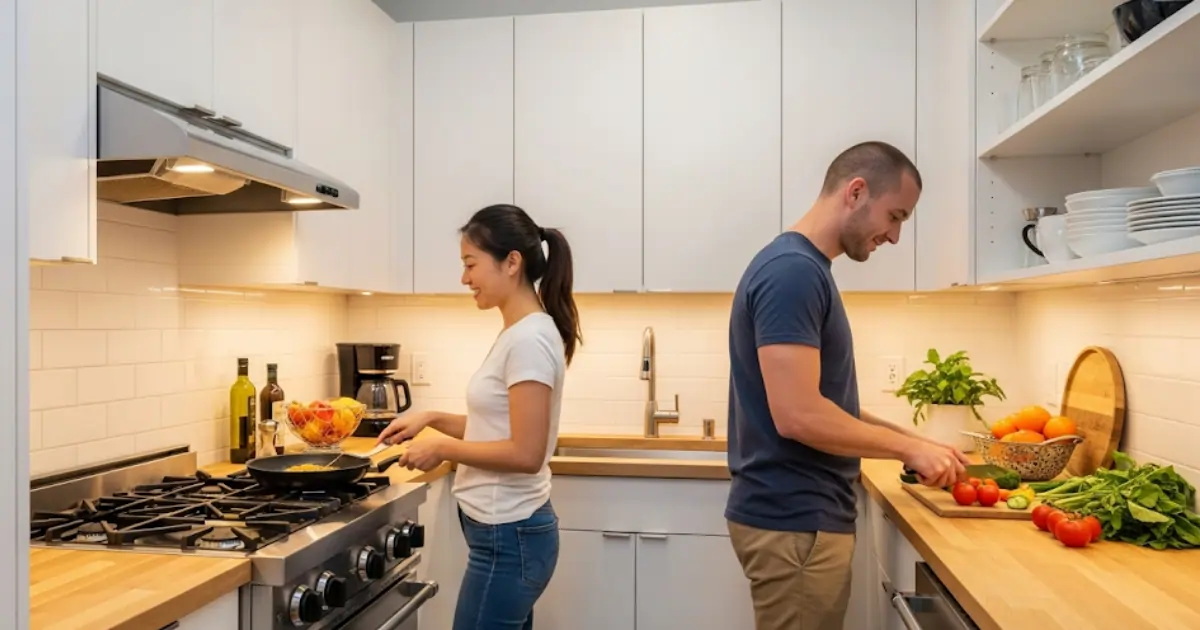
The kitchen is the heart of the home, but when space is limited, maintaining functionality can seem like a challenge. Have you ever struggled to prepare a meal because you didn’t have enough counter space? Or felt frustrated trying to store utensils in overcrowded cabinets? The good news is that a compact, functional kitchen can be extremely practical, modern, and comfortable—as long as it’s designed intelligently. In this in-depth article, you’ll learn how to transform your kitchen into a functional space, even if it’s only a few square meters.
Compact and Functional Kitchens: Challenges and Opportunities
A. Common Challenges
B. Opportunities Offered by a Good Layout
- Efficiency in Your Daily Routine: Everything at Your Fingertips
- Waste reduction: more control over what you have
- Ease of cleaning and maintenance
- Integration with the home's living areas
C. Making the Most of Your Time with a Compact and Functional Kitchen
The time spent on kitchen tasks can vary dramatically depending on how organized the space is. In disorganized kitchens, finding utensils, ingredients, and equipment can become a constant challenge, causing simple tasks to take much longer than necessary. Studies indicate that people in disorganized kitchens can spend up to 50% more time preparing a meal due to interruptions caused by searching for items or having to redo work.
On the other hand, a compact and functional kitchen optimizes time and reduces stress during food preparation. A good layout of items, a clear division into zones of use (such as prep, cooking, and washing), and easy access to frequently used utensils make the process more seamless. This can significantly reduce the average preparation time, with estimated savings of up to 30 minutes per day, depending on the household’s routine.
Another important factor is predictability. In a compact and functional kitchen, the user knows exactly where each item is and how it should be used, avoiding wasted time due to improvisation or substitutions. In a disorganized kitchen, however, in addition to delays, it’s common for food to go to waste due to forgetfulness or improper storage, which also increases the time spent redoing tasks or planning new purchases.
In addition to saving time on daily meal preparation, functional kitchens also require less time for cleaning and maintenance. Clear countertops, smart storage, and fewer unnecessary items allow for faster and more effective cleaning. In contrast, disorganized spaces accumulate dirt more easily and take longer to restore to even a minimally functional state.
Organizing a compact and functional kitchen isn’t just a matter of aesthetics—it’s a real strategy for optimizing your time in everyday life. Those who invest in a functional layout reap the benefits of greater efficiency, less stress, and more enjoyment while cooking. On the other hand, a lack of organization can turn simple tasks into frustrating experiences, consuming time and energy and negatively impacting daily household routines.
The 4 Principles of a Compact and Functional Kitchen
1. Smart zoning
The ideal kitchen has clearly defined areas for:
- Preparation (countertops, cutting boards, knives, bowls)
- Cooking (stove, pots, cookware)
- Cleaning (sink, detergent, rags, dish rack)
- Storage (dry goods, kitchenware, small appliances)
🔧 Handy tip: Place utensils near the area where they’re used most often.
2. Vertical Organization of Space
- Use shelves above the sink
- Install metal rods for hanging utensils
- Make the most of the space at the top of your cabinets with storage bins
3. Multifunctional and compact furniture
- Cabinets extending to the ceiling with internal dividers
- Organized drawers with modular bins or baskets
- Rolling kitchen carts with fold-down tops
4. Constant decluttering
- Do monthly reviews: anything you haven't used in the last 6 months can go
- Avoid keeping duplicate items you rarely use
- Adopt the “1 in, 1 out” rule for kitchen utensils
More Functional Layouts for Small Kitchens
A. Straight (linear) kitchen
- Ideal for apartments with a hallway or studio apartments
- Everything lined up along one wall: cabinets, sink, stove
- Use rails and panels above the countertop to maximize vertical space
B. L-Shaped Kitchen
- Excellent use of corners
- Allows for a continuous work area (prep area, stove, sink)
- It provides space for a bench or a table attached to the other end
C. Kitchen with an island or peninsula
- Suitable for open-concept studios with a living room
- The island can serve as a table, countertop, cabinet, and room divider all at once
- Option of stools for quick meals
Lighting and Colors: How to Make a Space Look Larger
Tip: Mirrors on walls or doors create a greater sense of depth.
Internal organization: the secret to practicality
A. Organized drawers
- Dividers for cutlery and wooden spoons
- Drawers with 100% extension slides and soft-close mechanisms
- Internal labels to make restocking and locating items easier
B. Upper and lower cabinets
Case Study: Mariana, 28, lives alone in a 38-square-meter apartment
Challenge: She used the kitchen only as a place to store things. She felt unmotivated to cook and always ordered takeout because of the lack of space and organization.
Changes applied:
- Got rid of duplicate and rarely used items
- She installed wall rails with hooks for kitchen utensils
- She used shelves with labeled storage baskets
- Installed LED lighting under the upper cabinet
- Replaced the table with a retractable countertop and stools
Results after 3 weeks:
- She started cooking 4 times a week
- She found more pleasure in organizing and keeping things clean
- She cut her food delivery spending by 35%
Sustainability in a Compact and Functional Kitchen
Sustainability in a compact, functional kitchen goes far beyond choosing energy-efficient appliances; it starts with smart space planning. Small spaces require conscious decisions about what is truly necessary, avoiding the accumulation of utensils and food that end up being wasted. Thus, the size itself limits excess and encourages simplicity—a principle that is sustainable by nature.
Another important strategy is making the most of food, a practice that’s gaining traction in small kitchens. The lack of space to store large quantities encourages the mindful use of available ingredients, reducing waste. In addition, it becomes easier to plan meals based on what’s already in the fridge or pantry, promoting more responsible consumption.
The use of compact composters has also become a viable alternative for those living in small spaces. Small, odorless models can be installed on balconies, in utility rooms, or even under the sink, helping to reduce organic waste. This type of solution encourages the adoption of more sustainable habits, even in urban settings.
Another way to promote sustainability is to choose multifunctional kitchen items. In a compact and functional kitchen, every item should have real value and utility, which leads to choosing durable, versatile pieces that often have a lower environmental impact during production. Opting for materials like glass, stainless steel, or bamboo instead of disposable plastics also reinforces this commitment.
A compact and functional kitchen is the result of mindful habits. Reducing energy consumption with LED lighting and the efficient use of the stove, oven, and refrigerator; reusing jars and packaging; avoiding an excess of processed foods; and choosing locally sourced foods are actions that, when combined, make a difference. Even in small spaces, it’s possible to cook with purpose and respect for the environment.
- Avoid buying too much: keep your inventory to a minimum
- Use labeled glass jars to store bulk food
- Choose durable organizers (stainless steel, acrylic, bamboo)
- Set up mini compost bins or grow herbs on your windowsill
Extra tips for making the most of every centimeter
- Install hooks on the inside of the cabinet doors
- Use wall-mounted magnets for knives and spice containers
- Stackable boxes with open fronts make access easier
- Use an over-the-sink dish rack to free up counter space
- Have just 1 or 2 sets of optimized cookware
Functionality is more important than space
A compact, functional kitchen doesn't have to be a problem. With strategic organization, the right choice of furniture, smart use of wall space, and a little creativity, you can turn a small space into a practical one—and a practical one into an enjoyable one. Remember: cooking doesn’t have to be chaotic. It can be effortless, simple, and even therapeutic.
See Also
Comments
Loading comments…