Weekly Meal Planning
Eating well doesn’t have to mean spending hours in the kitchen or spending a lot of money. Meal planning is the key to ensuring that, even when you’re on the go, you always have nutritious and tasty meals on hand. With good weekly planning, you’ll reduce food waste, save money, maintain a balanced diet, and even free up time for other areas of your life.
What Is Meal Planning?
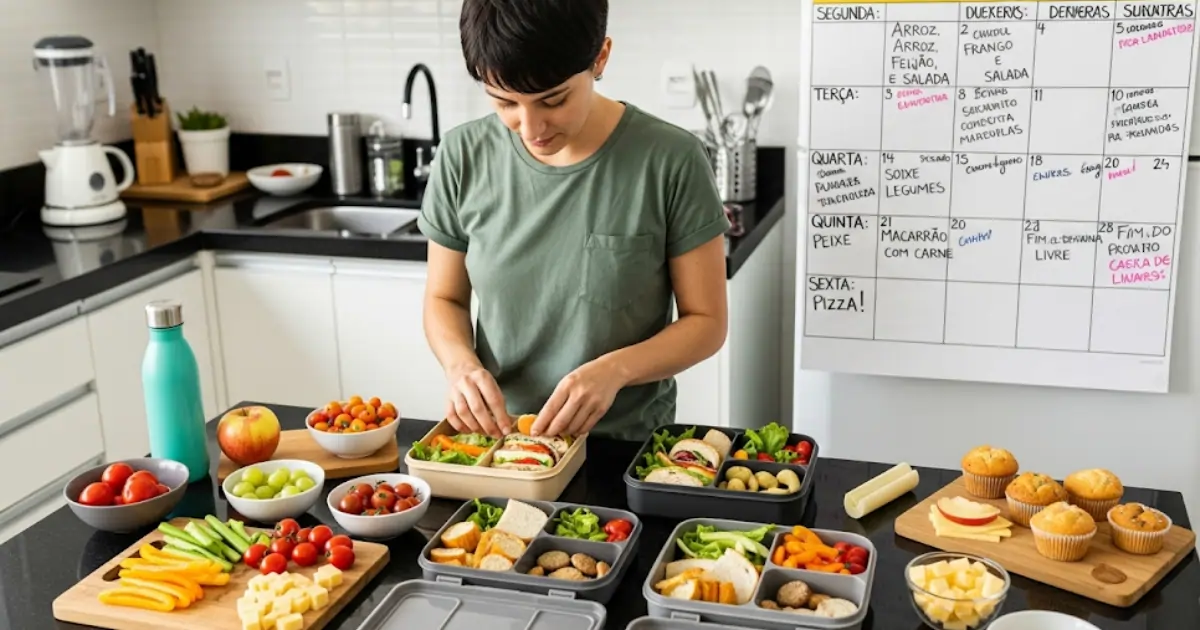
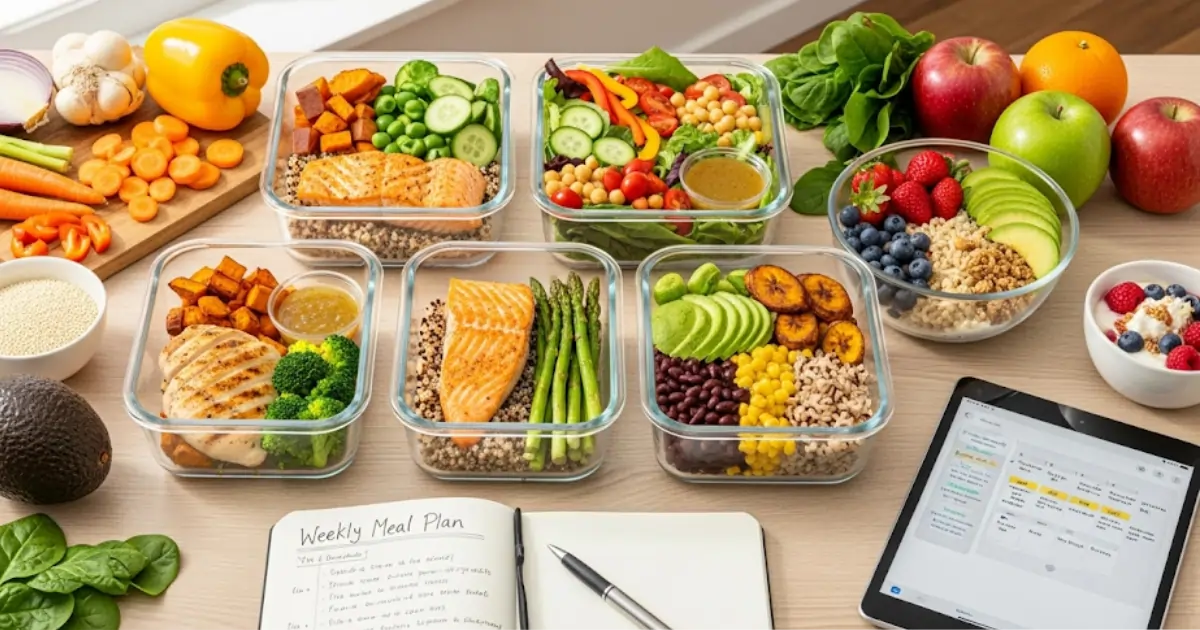
Meal planning is the process of organizing in advance what you will eat throughout the week, including breakfast, snacks, lunch, and dinner.
It combines nutrition, organization, and strategy, helping people maintain a balanced diet tailored to their individual routines.
📌 Key benefits:
- Time savings
- Portion Control
- Less food waste
- Less daily stress over “what to cook”
- Better nutritional balance
Step-by-Step Guide to Creating a Weekly Meal Plan
Step 1 – Assess your routine
- Work or Study Hours
- Frequency of eating out
- Food Preferences and Restrictions
Step 2 – Set Your Goals
- Weight loss, weight maintenance, or muscle gain
- Improved digestive health
- Increased energy
Step 3 – Choose balanced recipes
- Include complex carbohydrates, lean proteins, and healthy fats
- Eat a variety of fruits and vegetables throughout the week
Step 4 – Put together the menu
- Organize recipes by day of the week
- Leave room for adjustments (events, dinners out)
Smart Shopping for Seasonal Meal Planning
Smart shopping for seasonal meal planning is a strategy that goes beyond saving money: it also contributes to a more nutritious and sustainable diet. Each season offers a variety of fruits and vegetables at the peak of their quality, with more affordable prices and more intense flavor. By prioritizing these foods, you reduce costs, support local production, and enjoy produce harvested at the perfect point of ripeness.
In the summer, for example, high temperatures call for planning lighter, more refreshing meals. It’s the ideal time to enjoy water-rich fruits, such as watermelon, cantaloupe, pineapple, and mango, which help with hydration and provide natural energy. Vegetables like lettuce, arugula, and spinach are more abundant, as are tomatoes, which become sweeter and more flavorful. These choices not only suit the weather but also take advantage of lower prices due to the abundance of supply.
Come fall, the weather starts to cool down, and nature provides foods that help strengthen the immune system. It’s time to include foods like pumpkin, sweet potatoes, arracacha (Brazilian parsley), and carrots—which are sources of beta-carotene and fiber—in your meal planning. Fruits like apples, pears, and persimmons are in season, making them perfect for more comforting snacks and desserts. In addition to being nutritious, these foods tend to keep better during this season.
Winter, on the other hand, is the perfect time to enjoy foods that warm you up and provide extra energy. Leafy greens like kale and escarole, which are rich in vitamins and minerals, have a more intense flavor and are ideal for soups and stir-fries. It’s also the best time of year for citrus fruits like oranges, tangerines, and lemons, which are rich in vitamin C and help prevent colds. By buying in season, you’ll find lower prices and fresher produce, even on cold days.
Spring is a time of transition, marked by the return of milder temperatures and an abundance of colors and flavors. It’s when strawberries, pineapples, passion fruit, and peaches start to appear juicier and sweeter. Vegetables like cucumbers, zucchini, and eggplant take center stage, making them ideal for salads, grilled dishes, and light meals. Taking advantage of this variety is also an opportunity to diversify your menu and try new recipes.
In addition to fruits and vegetables, seasonal shopping also applies to other products in meal planning, such as fish and seafood, which have closed seasons and are of higher quality at certain times of the year. This ensures not only better flavor but also respect for the natural reproductive cycles of these species, contributing to environmental conservation.
Another benefit of meal planning is its positive impact on the local economy. By choosing seasonal produce, you end up buying more from small-scale producers and regional farmers’ markets, thereby strengthening family farming. These foods generally undergo fewer transportation and storage processes, arriving fresher at your table and with a smaller carbon footprint.
Planning your shopping around the seasons helps you create a more balanced and creative menu. Seasonal limitations serve as an incentive to vary your recipes, try different combinations, and rediscover flavors. In addition to promoting good health, this strategy is a mindful way to shop that respects nature’s rhythm and benefits both your wallet and the planet.
Make a shopping list
- Based on this week's menu
- Divided into categories: fruits and vegetables, proteins, grains, dairy products, seasonings
Choose seasonal foods
- Cheaper, tastier, and more nutritious
Avoid impulse buying
- Go to the grocery store after eating
- Focus on the list
Preparation and Storage Techniques for Meal Planning
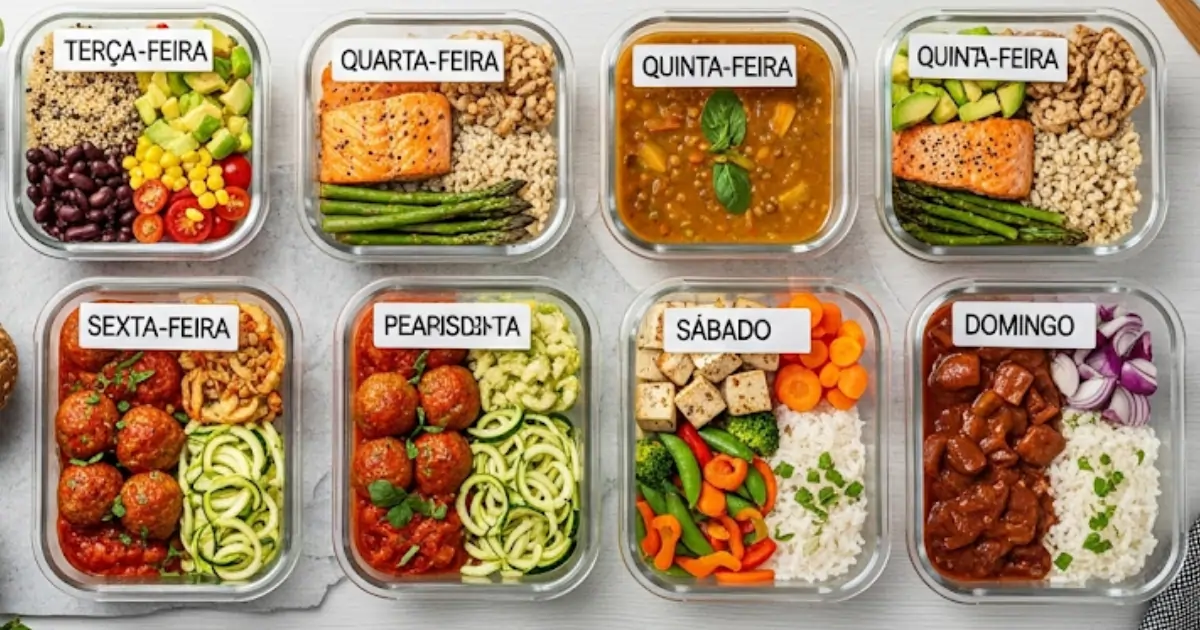
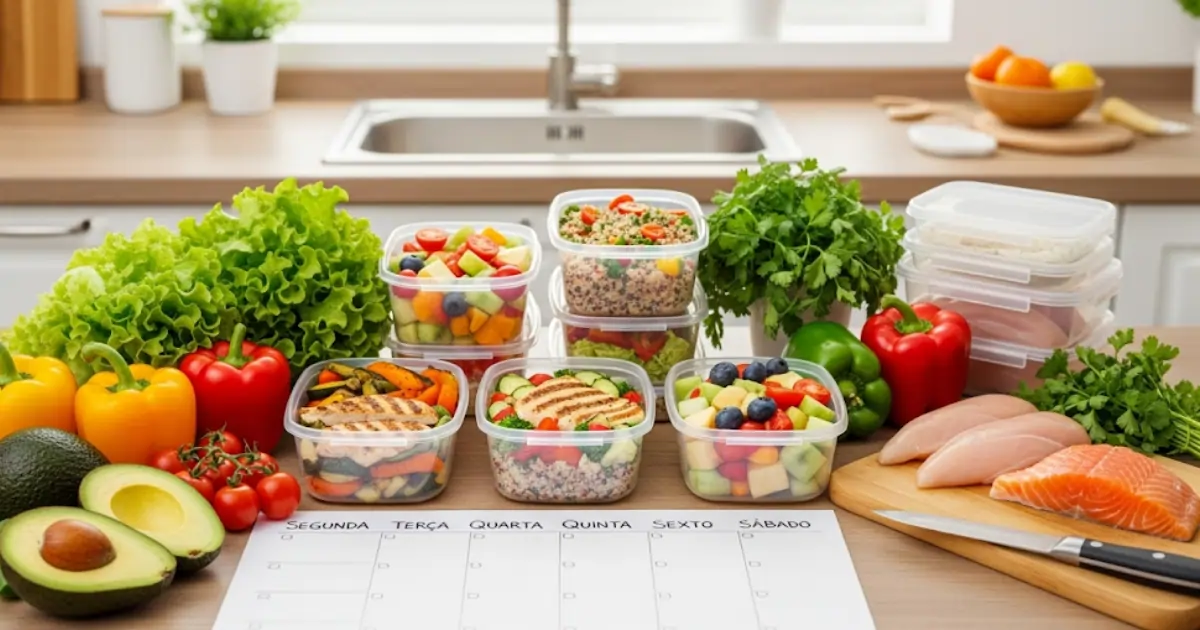
- Batch cooking: cooking in large batches and storing portions
- Prep work: chop the vegetables and have the seasonings ready
- Smart Freezing: Use airtight containers and label them with the date
💡 Handy tip: Brown rice and beans can be cooked in large batches and frozen in individual portions to make your daily life easier.
Practical weekly meal-plan examples
Monday
- Breakfast: overnight oats with berries
- Lunch: grilled chicken, quinoa, and steamed vegetables
- Snack: assorted nuts
- Dinner: lentil soup
Tuesday
- Breakfast: green smoothie
- Lunch: baked fish, sweet potatoes, and arugula salad
- Snack: plain yogurt with honey
- Dinner: vegetable omelet
Wednesday
- Breakfast: tapioca with white cheese and oregano
- Lunch: grilled lean meat, brown rice, and sautéed broccoli
- Snack: slices of papaya with chia seeds
- Dinner: Cream of Pumpkin Soup with Ginger
Thursday
- Breakfast: whole-wheat bread with avocado and tomato spread
- Lunch: chicken in herb sauce, mashed arracacha (Brazilian parsley), and lettuce salad with grated carrots
- Snack: mixed dried fruit
- Dinner: a hearty salad with chickpeas, cucumber, tomato, and a hard-boiled egg
Friday
- Breakfast: oatmeal with banana and cinnamon
- Lunch: grilled fish, Moroccan couscous, and roasted vegetables
- Snack: tropical fruit smoothie
- Dinner: mixed vegetable soup with shredded chicken
Saturday
- Breakfast: whole-grain pancakes with sugar-free jam
- Lunch: filet mignon with onions, brown rice, and sautéed spinach
- Snack: plain yogurt with fresh strawberries
- Dinner: quinoa salad with roasted pumpkin, spinach, and sunflower seeds
Sunday
- Breakfast: omelet with spinach and mushrooms
- Lunch: herb-roasted chicken, rustic potatoes, and red cabbage salad
- Snack: slices of grilled pineapple with mint
- Dinner: cream of pea soup with whole-grain toast
Common Mistakes and How to Avoid Them
Useful Tools and Apps
- Mealime: Create meal plans and shopping lists
- Trello or Notion: organize recipes
- Yazio: nutrition tracking
- Pinterest: Recipe Inspiration
Checklist for Getting Started
- List your goals
- Choose recipes for the week
- Make a shopping list
- Set aside a day for cooking
- Organize your food into portions
- Use labels and dates
Meal planning is an investment in your health, your finances, and your quality of life. With a few adjustments and some practice, you can transform your relationship with the kitchen, making mealtime more enjoyable and less stressful.
See Also
Comments
Loading comments…