Healthy Weekly Meal Plan
Planning what we’re going to eat during the week seems simple, but in the hustle and bustle of everyday life, this task can become a challenge. A healthy weekly meal plan not only helps you save time and money but also ensures a more balanced diet and prevents impulsive food choices. In this article, we’ll explore, step by step, how to create an efficient, varied meal plan tailored to your needs—all based on practical strategies, real-life examples, and expert tips.
Benefits of a Healthy Weekly Meal Plan
Improving Nutrition
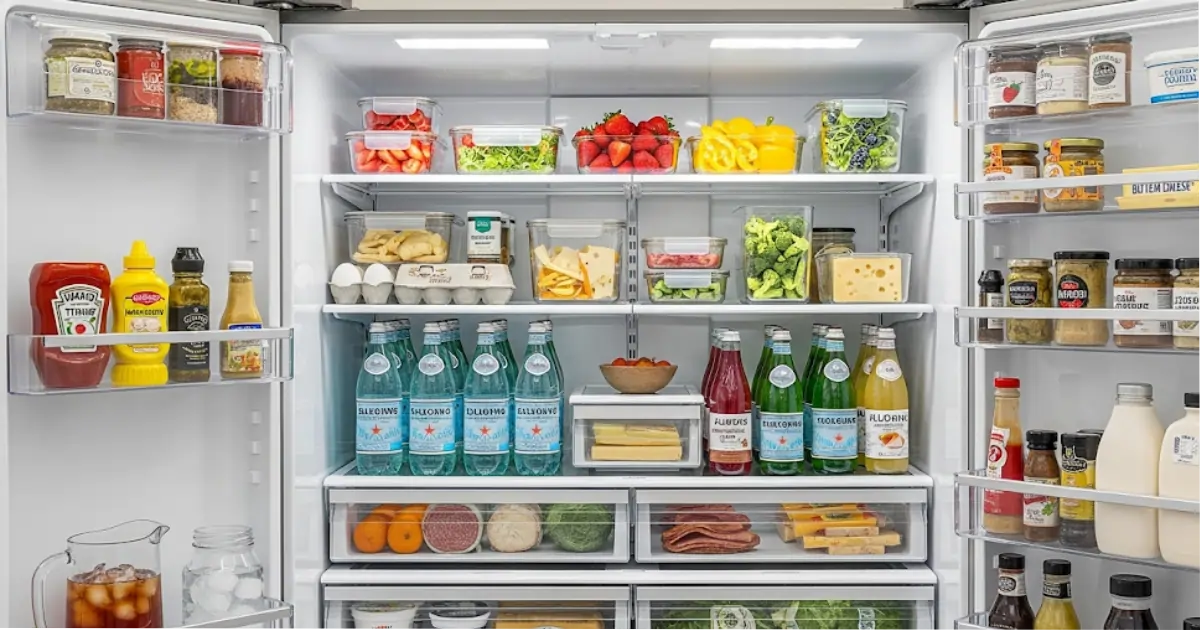
Having a plan reduces the consumption of ultra-processed foods and increases the intake of fruits, vegetables, and lean proteins.
📊 Study: According to the World Health Organization, planning meals in advance is associated with a 20% increase in vegetable consumption and a 15% decrease in fast-food consumption.
Financial savings
You buy exactly what you'll use, avoiding waste and impulse purchases.
Stress Reduction
With a meal plan in place, you can avoid the classic “What are we going to eat today?” question at the end of the day.
Steps to Create Your Healthy Weekly Meal Plan
Creating a healthy weekly meal plan is a practical strategy for maintaining a balanced diet, saving time, and avoiding impulsive decisions at mealtime. The first step is to define your dietary goals. Before you start planning, think about your needs: do you want to lose weight, gain muscle mass, improve your energy levels, or simply maintain healthier habits? This clarity will help guide your choices regarding foods, portion sizes, and food combinations, preventing both overconsumption and nutritional deficiencies.
The second step toward a healthy weekly meal plan is to assess your routine. Take note of how many meals you eat per day, your busiest times, and the moments when you tend to feel hungriest. That way, you can plan appropriate meals for each occasion. For example, if your mornings are hectic, it’s best to opt for quick and nutritious breakfasts, such as overnight oats or smoothies, rather than dishes that require a lot of time in the kitchen.
Next, make a list of the foods that are available and that you prefer. Include fruits, vegetables, lean proteins, whole grains, nuts and seeds, and dairy products (or plant-based alternatives). Having a variety of ingredients that you like and can easily access makes planning much easier, since it reduces the chance of waste and increases your adherence to the meal plan.
The fourth step is to plan your main meals. Start with lunch and dinner, choosing a protein source (chicken, fish, eggs, legumes), side dishes (brown rice, quinoa, sweet potatoes), and portions of vegetables. Make sure to vary your meals throughout the week so that each meal provides different nutrients and to avoid monotony.
Next, think about snacks between meals. They’re important for maintaining your energy levels and preventing you from overeating at your next meals. Prioritize convenient and nutritious options, such as fresh fruit, mixed nuts, plain yogurt, carrot sticks, or whole-grain sandwiches with healthy fillings.
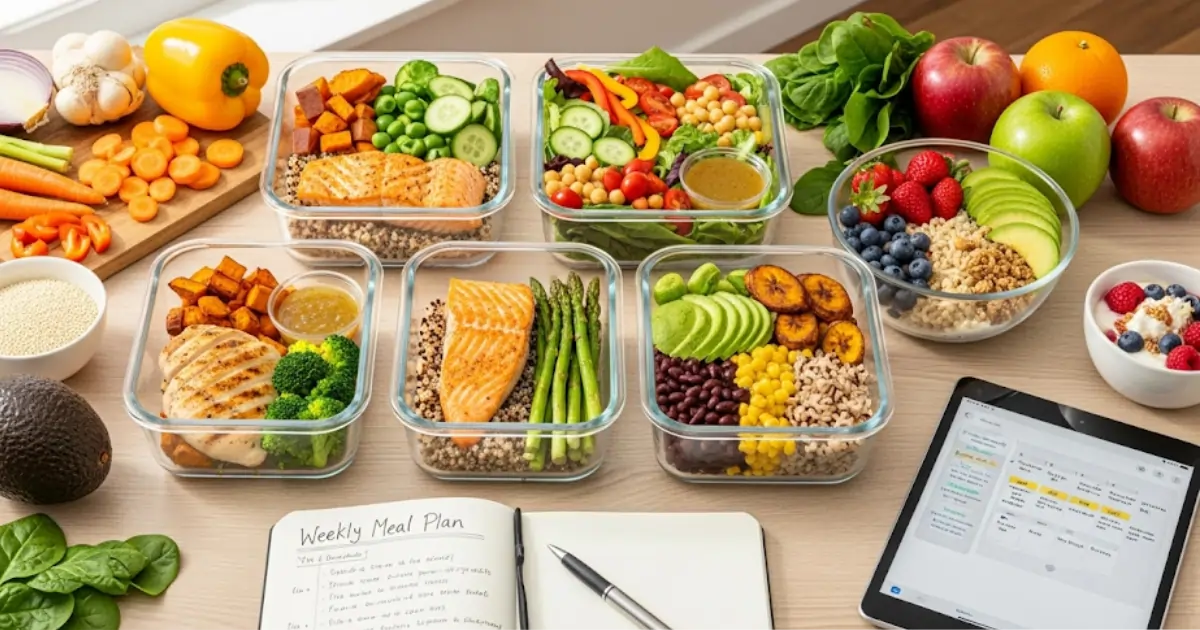
The sixth step is to balance the macronutrients (carbohydrates, proteins, and healthy fats) in each meal. This helps maintain satiety, steady energy levels, and proper bodily function. A balanced meal, for example, might include brown rice (carbohydrate), chicken breast (protein), and broccoli sautéed in olive oil (healthy fat).
Next, create a detailed shopping list based on the menu. Include the right quantities to avoid waste and make sure you don’t forget any essential ingredients. This list will help you avoid impulse buys and stay focused on truly nutritious foods.
The eighth step is to set aside some time for prep work. Washing, cutting, and storing vegetables, cooking grains, and marinating or cooking meat in advance makes it much easier to stick to your meal plan during the week, especially on the busiest days.
It’s also important to build flexibility into your healthy weekly meal plan. Having one or two “go-to” meals that are quick to prepare (such as omelets, hearty salads, or frozen soups) ensures that, if something doesn’t go as planned, you can still maintain a healthy diet without resorting to ultra-processed foods.
Review and adjust your menu weekly. Take note of what worked, what was left over, what was missing, and which recipes were most popular. This ongoing process will make your planning increasingly efficient and tailored to your routine, turning the habit of eating well into something natural and enjoyable.
Set Your Goals
Ask yourself:
- Do you want to lose weight, maintain your current weight, or gain muscle mass?
- Do you have any dietary restrictions?
- How much time per day can you spend preparing meals?
Plan based on the days of the week
Include:
- Breakfast
- Lunch
- Dinner
- Snacks between meals
Principles for creating a healthy, balanced weekly meal plan
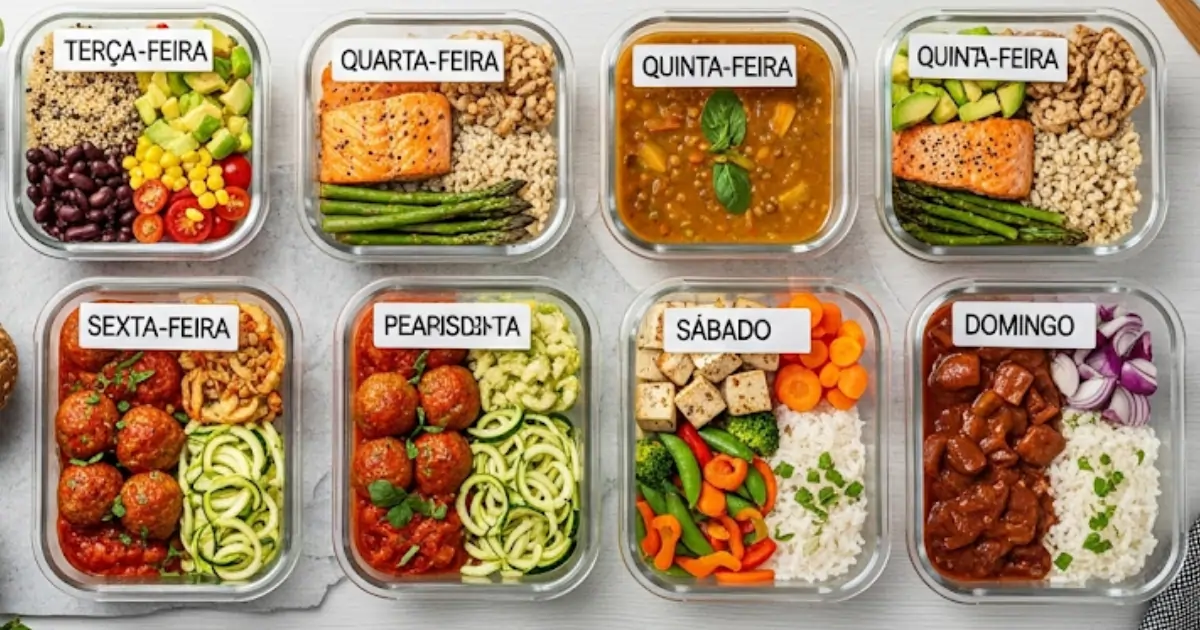
Example of a Healthy Weekly Meal Plan
Strategies to Make It Easier to Follow a Healthy Weekly Meal Plan
To ensure that a healthy weekly meal plan actually gets off the ground and becomes part of your routine, it’s essential to adopt strategies that make it easier to follow. The first of these is to set aside one day a week for planning. Choosing a fixed time, such as Sunday afternoon, helps establish a habit and prevents you from winging it during the week. At that time, you can plan your meals, make a list of ingredients, and get organized for grocery shopping.
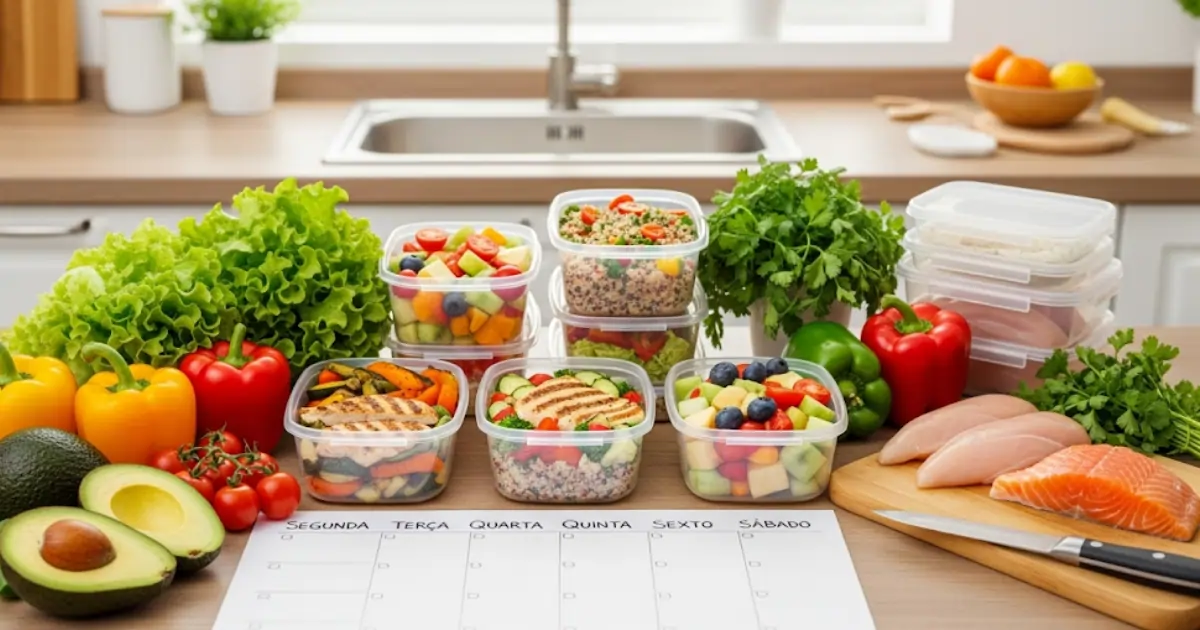
Another important strategy for a healthy weekly meal plan is to optimize your time in the kitchen through meal prep. Chopping vegetables, washing greens, cooking grains, and preparing seasoned or roasted proteins in advance can save you hours during the week. In addition, by getting a head start on these steps, you reduce the likelihood of opting for fast food and less healthy meals on your busiest days.
It’s also helpful to use appropriate, labeled containers. Portioning food into individual servings and labeling each container with its contents and preparation date helps prevent confusion and waste. This is especially convenient for people who bring lunch to work or want to better control their portion sizes.
A fourth strategy is to focus on versatile dishes. Dishes like shredded chicken, roasted vegetables, or brown rice can be used in different ways throughout the week, simply by changing the seasonings and side dishes. This way, you get variety without having to cook completely different meals every day.
Another helpful tip is to include quick recipes on your meal plan. Having options like omelets, hearty salads, whole-grain wraps, or frozen soups ensures that, even when you’re short on time, you can maintain a healthy diet without resorting to ultra-processed foods or takeout.
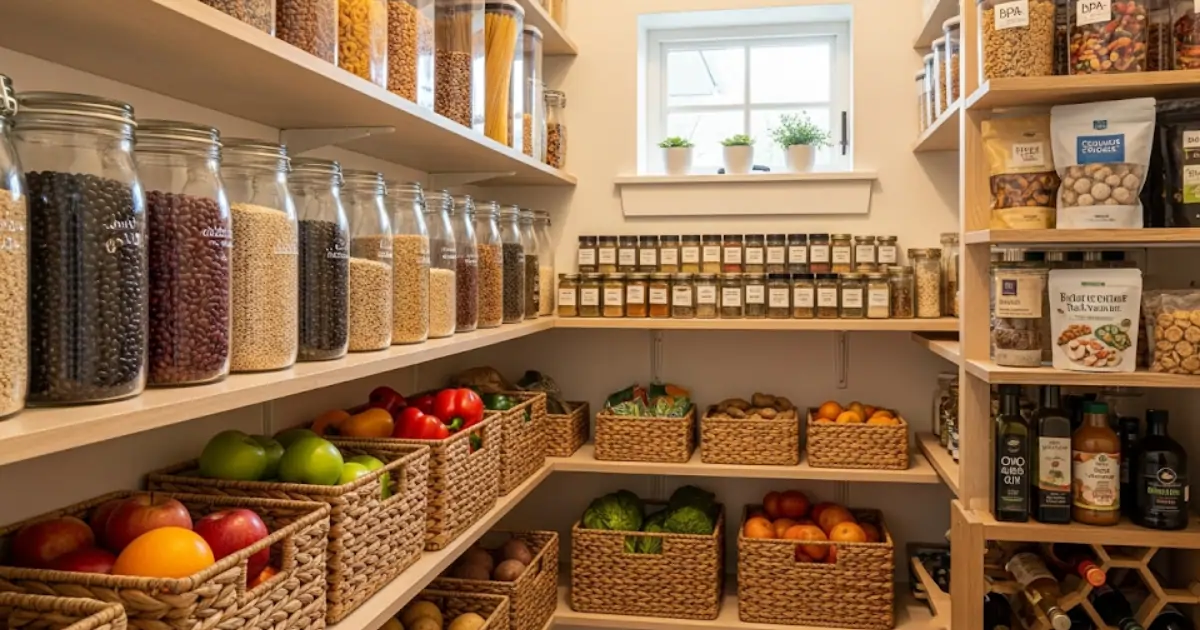
Keeping a well-organized and functional pantry is also essential. When you have basic ingredients like olive oil, natural spices, grains, nuts and seeds, and high-quality canned goods on hand, it’s much easier to quickly put together nutritious meals.
Technology can also be your ally. Organization and meal-planning apps help you keep track of schedules, record recipes, and even generate automatic shopping lists. This reduces the mental burden of having to remember everything and ensures greater consistency in sticking to your plan.
Another effective strategy is to cook in batches. Preparing a larger quantity of a dish and freezing portions for later saves time and ensures that you always have healthy meals ready, even on your busiest days.
It's important to be realistic about your meal plan. Plan meals that you actually enjoy and that fit into your routine. A meal plan that's too complicated or includes hard-to-find ingredients tends to be abandoned quickly.
Advance preparation (meal prep)
Set aside one day a week to:
- Cook grains
- Chop vegetables
- Portion meals
Smart Shopping List
Build your list from the meal plan and organize it by supermarket section.
Adapting the plan to different needs
Vegetarian and vegan diets
Include plant-based sources of protein such as lentils, beans, and tofu.
People with limited time
Choose quick meals, such as ready-made salads and omelets.
Large families
Plan meals that can be prepared in larger quantities and stored.
Common mistakes when planning a healthy weekly meal plan
- Lack of variety: eating the same foods all the time can lead to nutrient deficiencies.
- Ignoring the pleasure factor: healthy foods should also be tasty.
- Ignoring your routine: overly elaborate meal plans can become impractical.
Case Study
Profile: Maria, 35, mother of two, works full-time. Problem: Haphazard grocery shopping, food waste, and quick, unhealthy meals. Solution Implemented: She created a healthy weekly meal plan, shopped with a specific list, and started cooking in bulk on Sundays. Result: Savings of R$ 300 per month and an increase in the family’s vegetable intake.
Challenges and How to Overcome Them
A healthy weekly meal plan is more than just a list of meals; it’s a tool for organization, saving money, and promoting good health. By investing a few hours in planning, you’ll save time, avoid waste, and ensure a balanced diet. Start with small steps and adapt the plan to fit your routine.
See also
Comments
Loading comments…