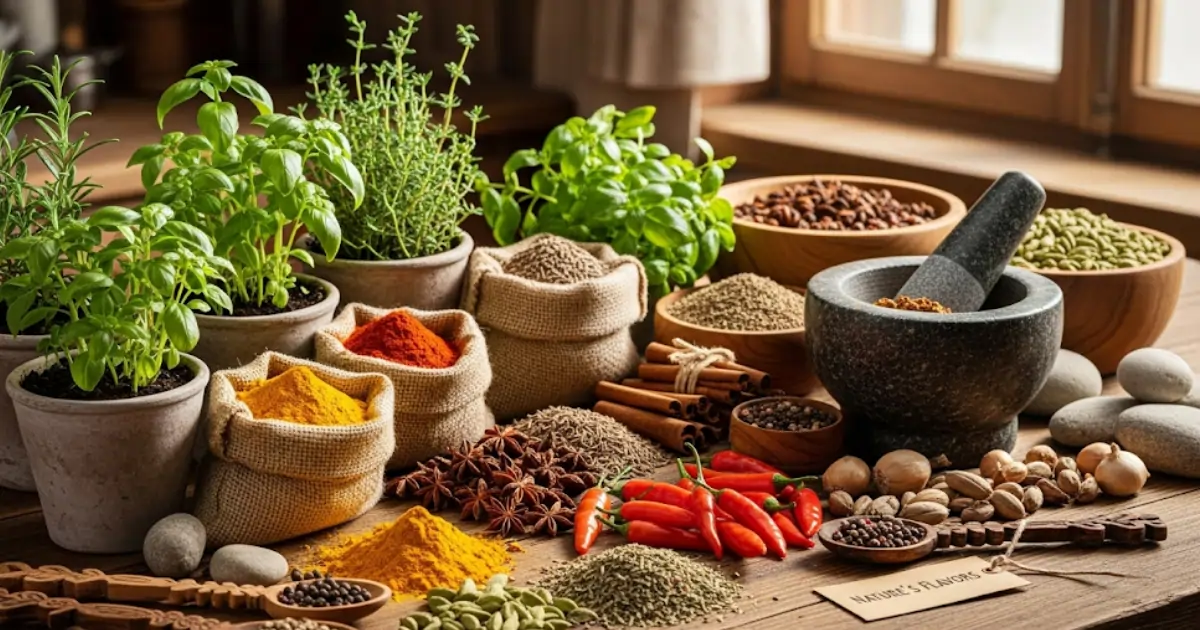
Natural Herbs and Spices
Cooking with herbs and natural spices is one of the simplest and most effective ways to turn an ordinary meal into a culinary experience. In addition to enhancing the flavor of food, these ingredients offer nutritional benefits, such as antioxidant, anti-inflammatory, and digestive properties. In this comprehensive guide, you’ll learn how to choose, combine, store, and use herbs and natural spices to enhance the flavor of your recipes without compromising your health.
Why use natural herbs and spices?
Health Benefits
- They reduce the need for salt, helping to control blood pressure
- They contain antioxidants that fight free radicals
- They can improve digestion and strengthen the immune system
📊 Study: Research suggests that replacing salt with natural spices can reduce the risk of high blood pressure by 30%.
The Difference Between Herbs and Natural Spices
- Herbs: Fresh or dried leaves of aromatic plants (basil, parsley, rosemary)
- Seasonings: Spices obtained from other parts of plants, such as seeds, roots, or bark (cinnamon, cloves, turmeric)
Common Herbs and Natural Spices and Their Uses
Natural herbs and spices are powerful allies in cooking and health, adding flavor, aroma, and nutritional benefits to dishes. Unlike processed seasonings, which often contain additives and excessive sodium, natural versions preserve active compounds that aid digestion, strengthen the immune system, and reduce inflammation. In addition, they allow you to create unique combinations, enhancing the dining experience without compromising the nutritional value of the food.
Basil is one of the most popular herbs, known for its fresh, slightly sweet aroma. It is widely used in Italian dishes, such as pasta, sauces, and pizzas, but it also pairs well with salads and soups. In addition to its flavor, basil contains antioxidants and has anti-inflammatory properties, which support cardiovascular health. It’s best added at the end of cooking to preserve its aroma and beneficial properties.
Rosemary is a versatile herb that pairs well with meats, potatoes, and roasted vegetables. Its distinctive aroma has notes of wood and resin, and it is especially popular in Mediterranean recipes. In addition to adding flavor, rosemary contains compounds that support blood circulation and memory. Because it is heat-resistant, it can be added right from the start of cooking.
Oregano is widely used in Mediterranean and Brazilian cuisine, especially in sauces, pasta, and pizza. Its intense flavor pairs well with tomatoes, cheeses, and meats. In addition to being a seasoning, oregano is rich in essential oils with antimicrobial properties, helping to prevent the growth of bacteria in food. It can be used either fresh or dried, with the dried version having a more concentrated flavor.
Parsley is a mild-tasting herb that adds freshness to a variety of dishes, such as salads, soups, sauces, and fish. Rich in vitamin C and iron, parsley helps boost immunity and prevent anemia. It is usually added at the end of cooking or used as a garnish to preserve its vibrant color and nutrients. Mixing parsley with chives creates the popular Brazilian green seasoning.
Cilantro is loved by some and rejected by others because of its distinctive flavor. It is widely used in dishes from northern and northeastern Brazil, as well as in Mexican and Asian recipes. Its leaves pair well with seafood, soups, and salads, while the seeds are ground and used as a spice. Cilantro aids digestion and has a detoxifying effect, helping to eliminate heavy metals from the body.
Ginger, although it is a rhizome and not a herb, is a highly prized natural spice. It adds a spicy and aromatic touch to both sweet and savory dishes, such as teas, soups, marinades, and cakes. It is known for its anti-inflammatory properties and for relieving nausea. It can be used fresh, dried, or in powder form, with each form offering a different intensity and aroma.
Turmeric (also known as Indian saffron) is an orange-yellow spice widely used in Indian and Brazilian cuisine. Its slightly earthy and bitter flavor pairs well with rice, stews, sauces, and vegetables. Rich in curcumin, a powerful anti-inflammatory, turmeric is even more effective when combined with black pepper, which enhances the absorption of its nutrients.
Cinnamon is an aromatic spice that can be used in both sweet and savory recipes. It’s great in cakes, porridges, baked fruits, meats, and even teas. In addition to its flavor, cinnamon helps control blood sugar levels and has antioxidant properties. It can be used as a stick for infusions or as a powder to sprinkle on food.
Black pepper is one of the most versatile spices in the world. Found in almost every kitchen, it enhances the flavor of dishes without masking other aromas. Rich in piperine, it stimulates digestion and increases the bioavailability of certain nutrients, such as curcumin in turmeric. It’s best to grind the peppercorns fresh to preserve their aroma and properties.
Basil
- Slightly sweet flavor
- Perfect for tomato sauces, pasta, and salads
Rosemary
- A distinctive and refreshing scent
- Pairs well with roasts, potatoes, and breads
Oregano
- Rich in antioxidants
- Great for pizzas, sauces, and meats
Turmeric (Indian saffron)
- Vibrant color and anti-inflammatory properties
- Great for soups, rice, and broths
Ginger
- Spicy and slightly citrusy flavor
- Used in sweet and savory dishes
How to Replace Processed Seasonings with Natural Herbs and Spices
Before
- Chicken bouillon cube (high in sodium and preservatives)
After
- A mixture of garlic, onion, parsley, and turmeric
Benefit: More flavor and much less sodium.
Harmonious combinations of herbs and natural spices
How to Store Natural Herbs and Spices
Fresh
- Store in the refrigerator wrapped in slightly damp paper towels
Dried
- Store in airtight containers, away from light and moisture
Techniques for Getting the Most Flavor Out of Herbs and Natural Seasonings
- Add fresh herbs at the end of cooking to preserve their aroma
- Lightly toast dried spices to enhance their flavor
- Use a mortar and pestle to release essential oils
Practical Recipes Using Herbs and Natural Spices
Recipe 1 – Grilled Chicken with Fine Herbs
Ingredients:
- Chicken breast
- Fresh thyme, rosemary, and sage
- Olive oil and lemon
Preparation:
- Marinate the chicken with herbs, olive oil, and lemon
- Grill until golden brown
Recipe 2 – Vegetable Soup with Turmeric
Ingredients:
- Assorted vegetables
- Turmeric and black pepper
- Natural vegetable broth
Preparation:
- Sauté vegetables
- Add turmeric and broth
- Cook until tender
Recipe 3 – Ginger and Mint Digestive Tea
Ingredients:
- Slices of ginger
- Fresh mint leaves
- Hot water
Preparation:
- Boil water with ginger
- Add mint before serving
Common Mistakes When Using Herbs and Natural Spices
- Using too much, which masks the food's natural flavor
- Mixing too many different spices without balance
- Storing spices near the stove (heat reduces their aroma)
Additional Benefits of Natural Herbs and Spices in Everyday Life
In addition to enhancing the flavor of dishes, the most common herbs and natural spices offer additional benefits that positively impact daily life. Incorporating them into your cooking routine not only reduces the need for salt and sugar but also provides bioactive compounds that strengthen the body and improve overall well-being. This simple change can, over time, contribute to a more balanced and functional diet.
The regular use of basil, for example, goes far beyond the fresh aroma it adds to recipes. Eating it can help regulate blood pressure and combat oxidative stress, which is especially helpful for those with fast-paced lifestyles. So, adding a few fresh leaves to salads or pasta dishes is a practical way to support cardiovascular health every day.
Rosemary, with its distinctive scent, not only adds flavor to meats and vegetables but also helps improve focus and concentration. Its essential oil has been studied for its potential to stimulate memory and mental clarity, which can be a great ally for those who work or study for long periods of time. Adding it to breakfast or lunch is a natural way to keep your mind active.
Oregano, in addition to its role in cooking, is an herb that acts as a natural antimicrobial. In everyday life, this means it can help preserve food better and even prevent digestive discomfort caused by bacteria. Sprinkling dried oregano on salads or sauces is a quick way to take advantage of this benefit.
Parsley, often seen merely as a garnish, is a rich source of antioxidants and minerals that support the immune system. In everyday life, eating it regularly can help maintain energy levels and combat fluid retention, thanks to its mild diuretic effect. Just a spoonful of chopped parsley at lunch provides a significant nutritional boost.
Cilantro, although it divides opinion, has detoxifying properties that help eliminate heavy metals from the body. This effect is especially valuable for those who live in large urban centers, where exposure to pollutants is higher. Incorporating it into fresh dishes, such as vinaigrettes and guacamole, is a delicious way to support the body’s natural detoxification process.
Ginger is a true ally in everyday life, aiding digestion and strengthening the immune system. It is also known to relieve muscle pain and reduce inflammation, which can be very helpful for those who exercise regularly. Drinking ginger tea or adding it to juices and stir-fries is a simple and effective practice.
Turmeric, with its powerful anti-inflammatory properties, is an ally in the fight against joint pain and chronic inflammation. In everyday life, this can mean less discomfort and more energy for daily activities. Using it when cooking rice or soups, or mixing it with warm milk, creates a preventive and comforting habit.
Cinnamon, in addition to being aromatic, helps control blood sugar levels, making it useful for preventing glucose spikes and hunger pangs throughout the day. This stabilizing effect can improve energy and concentration. A pinch of cinnamon in your coffee, yogurt, or baked fruit is enough to provide ongoing benefits.
Black pepper, with its stimulating effect on digestion, also increases the absorption of important nutrients. This means that when you combine it with other foods rich in beneficial compounds, your body will make better use of those nutrients. Including freshly ground black pepper in your meals is a simple step that boosts the nutritional value of your daily diet.
Key benefits of using herbs and natural spices:
- Increased culinary creativity
- Encouraging the Consumption of Fresh Foods
- Reducing the consumption of ultra-processed foods
Herbs and natural spices are indispensable allies for anyone seeking flavor and health in the kitchen. With knowledge of combinations, preservation, and preparation, you can transform every meal into a nutritious and irresistible dish.
See Also
Comments
Loading comments…